Teaching 4th graders Spanish in an enjoyable and effective way can be a challenge. You want children to build vocabulary, improve reading comprehension, understand spoken Spanish, and develop confidence. At the same time, you need lessons that hold their attention without turning every activity into another vocabulary quiz or grammar exercise they dread and struggle with.
Spanish Stories can help you bring these language learning goals together.
When children follow an exciting story, they have a reason to pay attention and keep studying. They want to discover what happens next, find out what a character is hiding, or see whether the hero succeeds. Spanish becomes part of an enjoyable experience rather than a collection of unfamiliar words to memorize.
With the right Spanish learning materials, you can make Spanish lessons for kids more engaging while giving students regular opportunities to hear, read, understand, and eventually be able to use the language.
LingoLina offers a growing library of free Spanish stories for 4th grade and other elementary school learners, including bilingual English-Spanish stories, Spanish-only stories, audiobooks, and playful learning materials.
Our bilingual stories use our unique NeuroFluent Immersion Method, which enables even complete Spanish beginners to easily follow along regardless of their level and naturally pick up Spanish vocabulary as they read.
These resources can help you introduce Spanish to beginners, support developing readers, and give more experienced learners opportunities to build fluency.
Go here to access all our free resources including Spanish and bilingual stories, activity sheets, coloring sheets, word puzzles, Spanish vocabulary game ideas, and free courses for educators on how to make learning Spanish easy and fun for kids.
About LingoLina’s Free Spanish Stories for 4th Grade Spanish Teachers
The free membership includes a growing collection of 40 free stories, 50 word puzzles, 60 coloring sheets, and 300 game and play ideas. Both bilingual English-Spanish and Spanish-only stories are available.
These materials give 4th-grade Spanish teachers different ways to bring Spanish into the classroom. You can read a story aloud, listen to an audiobook together, use a story as the starting point for a reading comprehension activity, or let students respond creatively through drawing, discussion, and play.
The goal is to make Spanish something children look forward to exploring.
Why Stories Make Spanish Learning More Fun for 4th Grade Kids
By 4th grade, many children are ready to work with longer stories, explore more complex ideas, and discuss what they have read. However, their Spanish skills may still be at a very early stage.
That creates a common classroom challenge. The material needs to be interesting enough for their age, yet understandable enough for their language level.
A story-based approach helps bridge that gap.
1. Children Have a Reason to Pay Attention
Imagine asking students to memorize a list of Spanish words. Some may enjoy the challenge, but others may quickly lose interest. They might start chatting, fidgeting, looking around the room, or distracting their classmates.
Now imagine beginning with a mysterious story about a strange creature, a magical object, or an unexpected adventure.
Suddenly, there is a question to answer. What is the creature? Why is the object magical? What will the characters do next?
The story gives children a reason to follow along. They are interested in the events, not just the language itself.
This does not mean every student will sit perfectly still or that stories eliminate classroom management challenges. Children have different needs, and some will still need movement, breaks, or extra support. However, interesting, understandable material can make it easier for many students to stay engaged.
For teachers, that can mean fewer moments spent trying to revive a lesson that has lost the class’s attention.
2. Learning Feels Less Like a Test
One of the difficulties of learning a new language is that children can understand the general idea of an activity without knowing what every word means. If they are constantly asked to recall vocabulary, complete drills, or produce correct answers, some may begin to worry about making mistakes.
That pressure can make participation harder.
Stories offer a different starting point. Children can follow a character, enjoy a funny moment, or wonder how a problem will be solved even while they are still learning the language.
They do not need to know every Spanish word to enjoy the story.
With bilingual stories, beginners can also understand the meaning from the English version before encountering the Spanish. This gives them a clearer starting point and can make unfamiliar language feel less intimidating.
As confidence grows, children may become more willing to listen, read aloud, share ideas, and try using new words.
3. Vocabulary Becomes Meaningful
A word is easier to understand when children encounter it in a situation that makes sense.
For example, students might memorize the Spanish word bosque, meaning forest. But when they hear it repeatedly in a story about a character wandering through a dark forest, hiding behind a tree, and searching for a way home, the word becomes part of a memorable scene.
The surrounding events help explain what is happening. Students also encounter other words and sentence patterns that belong to the same situation.
Stories give vocabulary a context, and that context can help children understand and remember what they hear and read.
4. Children Can Learn Without Memorizing Every Detail
Traditional language activities often require students to practice a specific word or grammar rule until they can recall it correctly.
Practice has its place, but children also benefit from repeated exposure to natural language.
When students return to stories, they encounter familiar words and sentence patterns again. Each encounter gives them another opportunity to recognize the language and understand how it works.
They do not necessarily need to stop and analyze every sentence. They can enjoy the story while gradually becoming more familiar with Spanish.
Over time, this repeated exposure can support vocabulary development, listening comprehension, reading comprehension, and a growing sense of how Spanish sentences fit together.
5. Lessons Become Something to Look Forward To
A good story creates anticipation. Children want to know what happens next, and that curiosity can help sustain their interest across a series of lessons.
You can build on this by revisiting favorite characters, continuing a story over several days, or letting students choose which story the class explores next.
This gives children a sense of involvement in their learning.
It also makes lesson planning more flexible. The same story can lead to a reading activity, a listening task, a short discussion, a drawing exercise, or a small performance. You do not have to invent an entirely new theme for every activity.
For teachers managing mixed abilities and busy classrooms, that flexibility is valuable.
What Is Comprehensible Input, and Why Does It Matter in 4th Grade?
If you have searched for comprehensible input materials for 4th-grade Spanish, you have probably come across this term.
Comprehensible input means language that learners can understand, even if they do not know every word or grammatical structure.
This matters because material that is far beyond a child’s level can be frustrating. If students hear a long passage in Spanish and cannot work out what is happening, they may stop paying attention or simply guess.
At the other extreme, material that is always too easy may not give them enough opportunities to encounter new language.
The aim is to give students language they can follow while gradually exposing them to unfamiliar words and sentence patterns.
Stories can support this in several ways:
- Bilingual stories: The English version helps establish the meaning before students encounter the Spanish.
- Spanish-only stories: These give learners opportunities to understand Spanish directly, using the words they already know and the context of the story.
- Audiobooks: Students can hear Spanish as they follow a written version, connecting the sounds of words with their written forms.
- Repeated storytelling: Revisiting familiar stories gives students another chance to recognize vocabulary and notice language patterns.
LingoLina’s NeuroFluent™ Immersion Method uses a simple bilingual format: each sentence appears first in the learner’s native language, followed immediately by its Spanish translation. The meaning is clear before the learner encounters the Spanish sentence.
This can make stories accessible to children who are just starting to learn Spanish, while giving more experienced learners opportunities to strengthen their understanding and encounter new language.
The method does not require students to translate every word themselves or flip between separate pages to find the meaning of a sentence.
Instead, they can follow the story from one sentence to the next.
Free Spanish Stories for 4th Grade: What Can Your Students Read?
Children in 4th grade are often drawn to stories with memorable characters, unusual situations, humor, mystery, and adventure. The more a story captures their imagination, the more opportunities it creates for meaningful engagement with Spanish.
LingoLina’s growing library includes several types of stories, so you can choose materials that suit your students’ interests and language levels.
Go here to access our stories for free!
Classic Fairy Tales in Spanish and English
Familiar fairy tales are a useful starting point for many elementary classrooms. Students may already know the characters and major events, which gives them some context before they begin reading or listening in Spanish.
The library includes more than 30 classic bilingual fairy tales, including well-known Western fairy tales and magical tales inspired by One Thousand and One Nights.
These short stories can provide opportunities to explore familiar plots, describe characters, discuss problems and solutions, and put events in order.
For example, after reading a fairy tale, students could identify the main character, explain what went wrong, or describe how the story ended.
Original Fantasy and Magical Adventures
For children who love imaginative worlds, LingoLina also offers original stories in bilingual English-Spanish and Spanish-only editions.
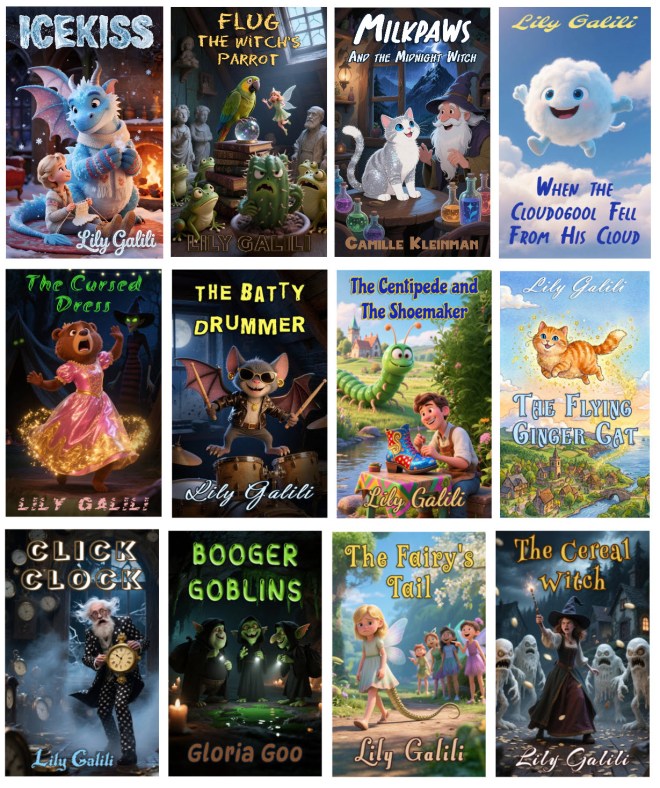
The collection includes magical adventures, whimsical tales, funny stories, unusual creatures, and action-packed plots. Titles include The Flying Ginger Cat, IceKiss, The Booger Goblins, The Cursed Dress, Flug the Witch’s Parrot, and The Cloudogool.
These stories can give students something unusual to imagine and discuss. They might predict what a magical object will do, draw a creature from the story, or explain how a character escaped a difficult situation.
You can also use them to introduce reading comprehension exercises that go beyond recalling individual words.
Funny and Whimsical Stories
Humor can make a story memorable. A silly character, an unexpected event, or an absurd situation gives students something to react to, making the lesson feel more like an enjoyable reading experience.
Funny stories can also provide natural opportunities to discuss characters’ actions, identify surprising events, and explain why something is amusing.
For children who feel nervous about learning Spanish, a playful story can offer a gentler entry point than an activity that immediately asks them to produce correct answers.
Stories for Different Spanish Levels
Not every 4th grader will have the same Spanish experience. Some may be complete beginners, while others may already understand common words and simple sentences.
Bilingual stories are especially useful when students need clear support with meaning. Spanish-only stories can offer more direct exposure for learners who are ready to understand more of the language without an English version after every sentence.
You can also vary the task rather than giving every student a different book. Beginners might identify characters and familiar words, while more experienced learners summarize the plot, explain a character’s motivation, or discuss how the story could have ended differently.
The aim is to keep everyone involved while providing an appropriate level of challenge.
Explore the growing library: Find free Spanish stories for kids.
Free Spanish Reading Comprehension Activities and Exercises for 4th Grade
Stories can be the foundation for reading comprehension activities without requiring every lesson to become a worksheet session.
The following ideas help students demonstrate understanding, develop language skills, and stay involved in the story.
1. Story Sequencing
Ask students to put several important events in the correct order.
You can provide simple written descriptions, pictures, or a set of cards. Students can work individually, in pairs, or as a class.
For Spanish beginners, pictures can reduce the amount of reading required. More experienced learners can sequence short Spanish sentences or write their own descriptions of the events.
This activity helps students follow the plot and recognize how one event leads to another.
2. Character and Setting Questions
After reading, ask students to identify the main character, explain where the story takes place, and describe the central problem.
You might begin with questions such as:
- Who is the main character?
- Where does the story happen?
- What problem does the character face?
- What does the character do next?
- How is the problem solved?
Adjust the language to your students’ level. Beginners can point to pictures, select an answer, or respond with a few words. More advanced learners can answer in complete sentences or explain their reasoning.
3. Predict What Happens Next
Pause before an important moment and ask students to predict what might happen.
They can choose from possible endings, discuss their ideas with a partner, draw a prediction, or write a short response.
Once you continue the story, students can compare their predictions with what actually happens.
This gives them a reason to listen carefully and follow the details.
4. Draw a Scene from the Story
Ask students to draw their favorite scene, an unusual character, or the moment when the story’s problem is solved.
They can label their pictures with Spanish words they recognize. Students who are ready for more can write a sentence or two describing the scene.
Drawing provides another way to demonstrate comprehension, especially for children who find written responses difficult.
5. Find the Evidence
For students who can work with longer Spanish passages, ask them to find a sentence or detail that supports an answer.
For example, if the question asks why a character became frightened, students can identify the event that caused the reaction.
You can begin with the English meaning of the question and gradually encourage students to locate relevant details in the Spanish text.
This helps them look beyond isolated vocabulary and follow the meaning of the story as a whole.
6. Retell the Story
Invite students to retell the main events in their own words.
They might use picture cards, act out scenes, speak with a partner, or write a short summary. Beginners can combine pictures with familiar Spanish words, while more experienced students can use longer sentences.
Retelling gives children an opportunity to organize what they understood and practice expressing ideas.
7. Create a New Ending
Once students know the characters and the problem, ask them to imagine a different ending.
Would the character make a different decision? Would a new character appear? Could the problem be solved another way?
Students can draw, discuss, perform, or write their endings depending on their language level.
This activity combines comprehension with imagination and gives children a personal reason to engage with the story.
8. Listen and Follow Along
Play a story’s audiobook while students follow the written text.
Ask them to listen for familiar words, notice when a character appears, or identify the moment when something important happens.
The purpose is not to catch every word. It is to help students connect written Spanish with spoken Spanish while following the meaning.
These activities can be adapted to different reading levels without requiring a completely separate lesson for every student.
How to Make Learning Spanish Fun for 4th Graders
If your students lose interest during vocabulary practice or struggle to stay focused during Spanish lessons, changing the learning experience may help.
The following ideas use stories to create variety, encourage participation, and give children more reasons to engage with the language.
Let Students Choose a Story
Whenever possible, offer a small selection of stories and let students vote on which one to explore.
One group may prefer fairy tales, while another enjoys funny adventures or magical creatures. Giving students a choice can make the lesson feel more personal and help build anticipation.
You can also let the class choose which story to continue over several lessons.
Turn the Story into a Mini Theater
Invite students to act out a scene, take the role of a character, or narrate a short sequence of events.
They do not need to memorize long Spanish scripts. Beginners can act out simple actions or repeat a short line, while more experienced students can improvise dialogue based on the story.
Movement can be particularly helpful when children need a break from sitting and reading.
Use Drawing, Movement, and Play
Not every response needs to be a written answer.
Students can draw a scene, arrange picture cards, act out an event, or move to different parts of the classroom to indicate their answers. These activities provide variety while keeping the story at the center of the lesson.
LingoLina’s free membership also includes coloring sheets, word puzzles, and game and play ideas that can complement story-based learning.
Revisit Stories Instead of Constantly Introducing New Material
Children benefit from having more than one opportunity to encounter language.
When you revisit a favorite story, students may recognize words they missed the first time, follow the plot more easily, and notice details they did not understand before.
You can change the activity each time. Read the story on Monday, listen to the audiobook on Tuesday, sequence the events on Wednesday, and act out a scene on Thursday.
The story stays familiar, but students engage with it in different ways.
Focus on Meaning Before Perfect Answers
If students believe every Spanish activity is a test of what they can remember, some may become reluctant to participate.
Try beginning with what they understand. Ask what happened in the story, which character they liked, or what they think will happen next.
As their confidence grows, you can encourage more Spanish responses and introduce more challenging questions.
This approach allows students to participate at different levels while continuing to develop their skills.
Why Story-Based Learning Can Make Classroom Management Easier
Teachers do more than teach vocabulary and grammar. They also need to keep students engaged, manage transitions, support children who are struggling, and make sure the class can learn together.
When material is too difficult, repetitive, or disconnected from children’s interests, maintaining attention can become harder. Students may give up, become distracted, or look for something more interesting to do.
An engaging story can give the class a shared focus.
Children have characters to follow, events to discuss, and questions they want answered. Activities such as predicting, drawing, acting, and sequencing provide different ways to participate.
This can help reduce boredom-related disruptions and make it easier to guide students through a lesson. It will not solve every classroom management problem, but it gives teachers a useful way to build interest into the learning itself.
Stories can also simplify lesson preparation. One story can support several activities, so you can build a sequence of lessons around a resource you already have rather than searching for a new worksheet or game every day.
The result can be a more enjoyable learning experience for students and a more manageable teaching routine.
A Simple Weekly Spanish Lesson Plan Using Stories
You do not need to redesign your entire Spanish curriculum to introduce more story-based learning. Try building a short sequence of activities around one story.
Monday: Discover the story
Introduce a bilingual story and read or listen together. Let students enjoy the plot and identify the main characters.
Tuesday: Listen and notice
Play the audiobook or revisit the text. Encourage students to notice familiar words, follow the sequence of events, and listen for important details.
Wednesday: Check comprehension
Use story sequencing, character questions, picture matching, or predictions to explore what students understood.
Thursday: Bring the story to life
Invite students to draw a scene, act out a moment, create a new ending, or retell the story with a partner.
Friday: Revisit and reflect
Return to the favorite parts of the story. Ask students what they remember, which character they enjoyed most, or which Spanish words they recognize now.
You can simplify or extend each activity depending on your students’ needs. The routine provides repetition without requiring the same exercise every day.
It also gives you several opportunities to observe comprehension without relying entirely on vocabulary tests.
Free Spanish Teaching Materials for Different Learning Needs
A useful collection of Spanish teacher resources should offer more than one way to work with language. Children differ in their reading ability, confidence, interests, and previous exposure to Spanish.
LingoLina’s free resources give you several options to combine according to your classroom goals.
- Bilingual English-Spanish stories: Helpful for beginners who need clear access to meaning.
- Spanish-only stories: Useful for learners ready to work more directly with Spanish.
- Audiobooks: Give students opportunities to hear Spanish while following a story.
- Word puzzles: Offer a playful way to revisit language.
- Coloring sheets: Add a creative activity connected to children’s learning.
- Game and play ideas: Help you introduce variety and movement into lessons.
You can use these resources for whole-class teaching, small groups, independent activities, or optional practice.
For a mixed-level class, the same story can support different tasks. One child might identify the characters, another might summarize the plot, and another might explain why a character made a particular decision.
This lets students work toward different goals while sharing an enjoyable learning experience.
Help Your 4th Graders Enjoy Learning Spanish
Children do not have to spend every Spanish lesson memorizing vocabulary lists or completing repetitive exercises. They can learn through stories that capture their imagination, make meaning easier to follow, and give them a reason to keep listening and reading.
For teachers, stories provide a flexible starting point for comprehension activities, listening practice, creative projects, and classroom discussion. They can also help reduce the frustration that arises when children are expected to understand language that is far beyond their current level.
The aim is not to remove all challenges from learning. It is to make those challenges understandable, engaging, and worth working through.
Explore LingoLina’s free Spanish stories and teacher resources:
With a growing collection of bilingual and Spanish-only stories, audiobooks, puzzles, coloring sheets, and play ideas, you can give your students more opportunities to enjoy Spanish while developing their listening and reading comprehension.
Frequently Asked Questions
Where can I find free Spanish stories for 4th grade?
LingoLina offers a growing library of free children’s stories in bilingual English-Spanish and Spanish-only editions. The collection includes classic fairy tales, original fantasy adventures, humorous stories, and other imaginative tales. Visit the free Spanish learning library to explore the available resources.
What are the best Spanish reading comprehension activities for 4th grade?
Useful activities include sequencing story events, answering questions about characters and settings, predicting what happens next, drawing important scenes, finding details that support an answer, and retelling the story. Choose activities that match your students’ reading and language levels.
How can I make Spanish lessons more fun for 4th graders?
Use interesting stories, give students choices, incorporate drawing and movement, let children act out scenes, and revisit favorite stories through different activities. Stories give students something meaningful to follow, while varied activities provide different ways to participate.
What is comprehensible input in Spanish teaching?
Comprehensible input is language that students can understand, even when they do not know every word. Stories can make Spanish more understandable through familiar situations, context, repetition, illustrations, and bilingual support.
Are bilingual Spanish stories suitable for complete beginners?
Yes. In a bilingual story using LingoLina’s NeuroFluent™ Immersion Method, each sentence appears first in English and then in Spanish. Beginners can understand the meaning before hearing or reading the Spanish version, making it easier to follow the story without already knowing Spanish vocabulary.
Can stories help improve Spanish reading comprehension?
Stories give students opportunities to follow a sequence of events, identify characters and settings, understand cause and effect, make predictions, and retell what happened. Regular reading and listening practice can support comprehension as students become more familiar with the language.
How can I teach Spanish to students with different ability levels?
Choose a story the class can follow, then adapt the activities. Beginners can identify characters, match pictures, or sequence events. More experienced learners can summarize the plot, answer more detailed questions, or create an alternative ending. This allows everyone to participate without requiring an entirely different lesson for each student.
Do children need vocabulary drills and grammar worksheets to learn Spanish?
Children can benefit from explicit instruction and practice, but these do not need to dominate every lesson. Stories provide meaningful examples of vocabulary and grammar in context, allowing students to encounter language as part of a connected experience. Teachers can combine story-based learning with other approaches according to their curriculum and students’ needs.
Does LingoLina offer free Spanish activities in addition to stories?
Yes. The free membership includes word puzzles, coloring sheets, and game and play ideas, alongside a growing library of bilingual and Spanish-only stories. These materials offer additional ways to bring variety and creativity into Spanish learning.


