Teaching Spanish to 10-year-old children can be wonderfully rewarding. It can also be challenging when students lose interest in vocabulary drills, struggle to understand Spanish stories, or progress at very different speeds.
You want children to enjoy learning, remember what they encounter, and gradually become comfortable understanding Spanish. You also need lessons that keep them engaged without spending hours preparing activities or constantly trying to bring distracted students back on task.
One of the easiest ways to make Spanish more enjoyable is to bring stories into the classroom.
At age 10, children can enjoy mysteries, magical adventures, funny characters, fairy tales, and imaginative worlds.
Stories give them something to care about, a reason to pay attention, and a natural context for discovering new words. Instead of treating Spanish as a subject made up of disconnected vocabulary lists, children experience it as a language used to tell exciting stories.
At LingoLina™, we make this approach even more accessible through our Spanish immersion stories and our unique NeuroFluent™ Immersion Method. In our bilingual NeuroFluent story format, each sentence appears first in English and is immediately followed by its Spanish translation. Children understand the meaning before encountering the new Spanish words, so they can follow the story even if they are complete Spanish beginners.
Our growing library of free Spanish stories, bilingual English-Spanish books, Spanish-only stories, audiobooks, and fun Spanish learning materials gives teachers more ways to make Spanish lessons engaging, understandable, and enjoyable for children at different levels.
Whether you teach complete beginners, more experienced learners, or a mixed-level group, bilingual and Spanish stories can help you create a learning experience children want to return to.
Where to Find Captivating Fun Free Spanish Stories for 10-Year-Old Kids
LingoLina’s free teacher resource library includes bilingual English-Spanish stories, Spanish-only stories, word puzzles, coloring sheets, and Spanish vocabulary learning game and play ideas. The collection is growing, with different types of stories to suit children’s interests, ages, levels, and language-learning needs.
You will find classic fairy tales, original fantasy adventures, magical tales, funny stories, and imaginative characters. These can be used for reading time, listening practice, classroom storytelling, creative projects, and reading comprehension activities.
The idea is simple: give children interesting content they can understand, and let the language become part of an experience they enjoy.
Access our free Spanish teacher resource library and download our Spanish stories!
Why Learning Spanish Through Stories Works So Well for 10-Year-Olds
Children around age 10 are old enough to enjoy more developed plots, unusual characters, humor, mysteries, and stories with unexpected twists. Yet their Spanish abilities may still be at the beginner stage.
This creates a common teaching dilemma. A story that is linguistically simple enough for beginners may feel too childish, while a story that matches their age and interests may contain too much unfamiliar Spanish.
Bilingual stories help solve this problem by separating the difficulty of the language from the enjoyment of the story.
1. Children Learn Spanish While Enjoying a Real Story
Think about the difference between memorizing a list of Spanish words and discovering what happens to a character in a magical adventure.
A vocabulary list gives children individual words to remember. A story gives those words a purpose.
If a character enters a mysterious forest, loses a precious object, or meets an unusual creature, students can follow the events and become curious about what happens next. Words appear as part of a connected experience rather than as isolated items on a worksheet.
This makes it easier to build a lesson around curiosity and imagination. Children can predict events, discuss characters, draw scenes, and listen to find out how the story ends.
They are learning through something they want to understand.
2. Understanding Comes Before the Struggle to Decode Every Word
One of the biggest obstacles for beginners is trying to understand Spanish when they do not yet know enough vocabulary.
Imagine giving a 10-year-old a story written entirely in Spanish. If the child recognizes only a handful of words, following the plot can become exhausting. They may have to guess constantly, ask for translations, or stop to look up unfamiliar words.
Some children keep trying. Others become discouraged or start paying attention to something else.
With LingoLina’s bilingual stories, each sentence is presented in English first and then in Spanish. The English sentence establishes the meaning, and the Spanish sentence immediately connects that meaning with the new language.
Children do not have to figure out the entire story from unfamiliar words. They can follow the plot and encounter Spanish in a context they already understand.
This support can make the experience more comfortable for beginners and more productive for learners who already know some Spanish.
3. Vocabulary and Grammar Become Part of a Meaningful Experience
Children encounter language patterns whenever they listen to or read a story.
They hear how characters describe things, express feelings, ask questions, and respond to events. They also encounter familiar words repeatedly, sometimes in new situations.
For example, a child might first encounter a Spanish word in a description of a forest, then hear it again when a character returns to the same place. The repeated encounters provide more opportunities to recognize the word and connect it with its meaning.
Grammar works in a similar way. Instead of encountering every sentence structure through a separate explanation, children see and hear Spanish sentences being used to communicate ideas.
They can gradually become more familiar with how the language works through repeated exposure to meaningful examples.
LingoLina does not rely on grammar lessons or vocabulary drills as the foundation of its story-based method. The stories themselves provide the language, context, and repetition.
4. Stories Can Reduce the Pressure of Getting Everything Right
Children can feel discouraged when every activity seems to test what they remember. If they are worried about forgetting a word or making a mistake, they may hesitate to participate.
A story offers a different starting point.
Children can enjoy the characters and follow the plot without needing to understand every Spanish word or produce a perfect answer. They can participate by identifying a character, predicting an event, drawing a scene, or explaining what happened.
As they become more familiar with the language, teachers can introduce more challenging tasks and encourage more Spanish responses.
This creates room for progress without making every encounter with Spanish feel like a test.
5. Children Have a Reason to Keep Listening and Reading
A good story creates curiosity. Children want to know what happens next, whether the character succeeds, and how the problem will be solved.
That interest can make it easier to return to Spanish regularly.
Stories also provide natural opportunities for repetition. Students can revisit a favorite story, listen to it again, or explore a new story with familiar characters and sentence patterns.
The goal is to make regular exposure to Spanish feel like an enjoyable part of the day rather than another chore.
When children enjoy the material, it becomes easier to build a sustainable learning routine.
How LingoLina’s Bilingual Spanish Stories Work for Beginners and Advanced Learners
One of the difficulties of teaching children Spanish is that age and language ability are not the same thing.
A group of 10-year-olds may include children who have never studied Spanish, children who recognize a few common words, and children who can already understand simple conversations or stories.
If you choose materials only for the average level, some students may struggle while others find the work too easy.
LingoLina’s NeuroFluent™ Immersion Method gives teachers another option.
Each sentence appears first in English and then in Spanish. This paired-sentence format provides immediate access to meaning without requiring children to search through a glossary or compare separate pages.
For complete beginners
Beginners can follow the story because they understand the English sentence before encountering the Spanish translation.
They do not need to arrive with a memorized vocabulary list. They can listen, read, and gradually become familiar with the Spanish words and sentence patterns they encounter.
This helps make stories accessible from the beginning, even when a child has little or no previous Spanish knowledge.
For children who already know some Spanish
Intermediate learners can use the English sentence to confirm the meaning and the Spanish sentence to strengthen their understanding.
They may recognize familiar words while encountering new vocabulary, expressions, and sentence structures. As they progress, they can pay more attention to the Spanish itself and rely less on the English support.
For advanced learners
More experienced children can continue enjoying age-appropriate stories while paying closer attention to the Spanish wording.
They can notice how sentences are constructed, recognize vocabulary in different contexts, and work on understanding the language more directly.
Teachers can also give these students additional challenges, such as summarizing the story in Spanish, explaining a character’s decisions, or creating an alternative ending.
For mixed-level classrooms
The same story can give the whole group a shared experience without requiring every child to have the same Spanish vocabulary.
Beginners can focus on understanding the story and recognizing familiar words. More experienced learners can examine the Spanish more closely or complete more demanding comprehension tasks.
No child has to be left behind simply because other students know more Spanish. At the same time, more advanced learners do not need to be limited to material designed only for beginners.
The bilingual support makes it easier to differentiate the activity while keeping everyone involved in the same story.
Fun and Natural Ways to Teach Spanish to 10-Year-Old Kids
If you want children to enjoy Spanish lessons, the activities should give them opportunities to explore, imagine, move, create, and communicate.
Stories make this easy because one engaging text can inspire many different activities. You do not need to turn every lesson into a vocabulary exercise to help students work with the language.
1. Read an Adventure Together
Choose a story with a plot that captures children’s interest. Introduce the characters, read or listen together, and pause at an exciting moment to ask what students think will happen next.
You can let children vote on possible outcomes or discuss their predictions with a partner.
Once the story continues, students can compare their ideas with what actually happened.
This gives them a reason to pay attention to the details and follow the plot.
2. Turn the Story into a Mystery
Choose a story with an unusual event, a hidden object, a strange character, or a problem that needs solving.
Ask students to identify clues and explain what they think is happening.
Beginners can choose from pictures or simple options. More advanced learners can support their answers with details from the story.
This turns listening and reading into an investigation rather than a passive exercise.
3. Let Children Draw What They Understand
Ask students to draw a character, a place, or an important moment from the story.
They can label the picture with Spanish words they recognize. Children who are ready for more can write a description or explain their drawing in Spanish.
Drawing gives students another way to demonstrate comprehension without requiring a long written response from everyone.
It is especially useful when the class includes children with different reading and writing abilities.
4. Act Out a Scene
Invite students to become the characters in a story.
They can act out a sequence of events, use gestures to show what is happening, or perform a short scene. Beginners can focus on actions and simple lines, while more experienced learners can add dialogue or narrate the scene.
This brings movement into the lesson and gives students a practical reason to revisit the story.
It also provides a natural opportunity to hear Spanish in context and experiment with speaking.
5. Create an Alternative Ending
After reading a story, ask students to imagine what would happen if the character made a different decision.
Would the adventure end differently? Would a new character appear? Could the problem be solved in another way?
Students can draw their ending, explain it to a partner, perform it, or write a short version in Spanish.
This activity encourages creativity while giving children a reason to use the language they have encountered.
6. Listen to an Audiobook While Following the Text
Listening is an important part of learning to understand spoken Spanish. However, audio can be difficult for beginners if they do not know what the words mean.
Bilingual stories help provide the meaning, while audiobooks offer opportunities to hear the Spanish as students follow the written text.
You can ask students to listen for familiar words, identify when a character appears, or notice the moment when an important event occurs.
There is no need to turn every listening session into a test. Sometimes, simply following and enjoying the story is a useful part of building familiarity with the language.
7. Let Students Choose Their Next Story
Offer a selection of stories with different themes, such as fairy tales, magical adventures, funny characters, or mysteries.
Let students choose which one the class explores next.
Giving children some choice can help them feel more involved in the learning process. It also helps you discover which kinds of stories capture their interest.
Once you know what they enjoy, you can use those preferences to plan future reading and listening activities.
Can You Use Stories for Montessori- or Waldorf-Inspired Spanish Learning?
If you prefer a more natural, child-centered approach to education, stories can fit comfortably into a Spanish learning routine inspired by Montessori or Waldorf principles.
These educational traditions are distinct, and story-based language learning is not automatically a complete Montessori or Waldorf program. However, teachers can draw on compatible ideas such as meaningful exploration, imagination, hands-on activities, and respect for children’s developmental needs.
A Montessori-Inspired Approach
Montessori-inspired learning often emphasizes independence, purposeful activity, and opportunities for children to explore at their own pace.
You can bring these ideas into Spanish story time by giving children a choice of stories, letting them revisit familiar texts, or offering several ways to respond to what they read.
For example, students might independently listen to a story, arrange picture cards to show its sequence, match illustrations with events, or create a scene using simple materials.
Bilingual stories can help make these activities more accessible because children do not need to depend on an adult to explain every unfamiliar sentence.
A Waldorf-Inspired Approach
Waldorf education places a strong emphasis on imagination, storytelling, artistic expression, and learning through experience.
You can draw on these ideas by reading or narrating a fairy tale, inviting children to illustrate a scene, acting out a moment, or creating artwork inspired by the story.
The focus can remain on the characters, events, and imagination while Spanish becomes part of the experience.
Bilingual stories offer an additional layer of support when children are not yet able to understand a complete story in Spanish alone.
A Natural Approach That Works Across Different Styles
You do not need to follow one educational philosophy exclusively to make Spanish learning more engaging.
You can combine storytelling, listening, reading, creative activities, independent exploration, and playful repetition in ways that suit your students.
The central idea is to make language understandable and meaningful while giving children opportunities to engage with it regularly.
Common Challenges Spanish Teachers Face When Teaching Children
Teaching a language involves more than choosing a textbook and explaining new words. Teachers must also keep children interested, accommodate different abilities, and help students continue when learning feels difficult.
Here are some common challenges that story-based learning can help address.
Students Forget Vocabulary Between Lessons
Children may recognize a word during a vocabulary exercise and then struggle to remember it a few days later.
Stories provide another way to encounter familiar words. When vocabulary appears repeatedly in meaningful situations, students have more opportunities to connect the word with its meaning.
Revisiting stories can reinforce this exposure without requiring every review session to become another memorization drill.
Beginners Struggle to Understand Spanish-Only Materials
Spanish-only immersion can be difficult when students have limited vocabulary. If they cannot follow the meaning, they may lose interest or feel that the material is beyond their ability.
Bilingual stories provide immediate meaning support, allowing beginners to follow the same story while encountering Spanish.
As their understanding grows, teachers can introduce more Spanish-only content and adjust the level of support.
Advanced Students Get Bored by Beginner Activities
In mixed-level groups, teachers may find themselves choosing between material that beginners can understand and material that challenges more experienced learners.
Bilingual stories help bridge that gap. Everyone can follow the plot, while teachers vary the tasks according to ability.
More experienced students can analyze characters, summarize events, explain their interpretations, or create their own Spanish responses. Beginners can concentrate on meaning and build familiarity with the language.
Children Become Restless During Repetitive Lessons
Repeated worksheets, drills, and recall exercises can become monotonous when they dominate a lesson.
Stories create a different kind of focus. Students want to know what happens, and teachers can use that interest to introduce prediction, discussion, movement, drawing, and performance.
No resource will keep every child engaged all the time, but interesting material gives students a meaningful reason to participate.
Students Feel Nervous About Making Mistakes
Some children hesitate to speak Spanish because they worry about using the wrong word or saying something incorrectly.
Story-based activities give them several ways to take part before they are ready to produce longer responses. They can point to a picture, predict an event, draw a scene, or discuss what happened.
Teachers can then gradually invite more spoken Spanish as students become comfortable.
Teachers Spend Too Much Time Preparing Lessons
Finding separate materials for reading, listening, vocabulary, and creative activities can take considerable planning time.
A single story can become the basis for several lessons. You can read it, listen to it, sequence the events, discuss the characters, act out a scene, and revisit the vocabulary that appears naturally.
This makes it easier to build a coherent series of activities around material you already have.
Why Bilingual Immersion Can Make Learning More Accessible and Enjoyable
Immersion is often associated with learning through the target language as much as possible. This can provide valuable exposure, but the experience depends on whether students can understand enough to follow what is happening.
For a child who knows very little Spanish, a long passage of unfamiliar language may offer too little meaning. The child hears Spanish but cannot easily connect the words with the story.
LingoLina’s NeuroFluent™ Immersion Method takes a different route to immersion. Each English sentence is immediately followed by its Spanish equivalent.
This paired-sentence structure helps children connect a meaning they already understand with the Spanish words used to express it.
The method offers several practical advantages:
- Immediate comprehension support: Beginners can follow the story without already knowing the Spanish vocabulary.
- Natural vocabulary exposure: Children encounter words as part of meaningful events and descriptions.
- Repeated contact with Spanish: Stories give learners opportunities to hear and read language across multiple sessions.
- Listening and reading together: Written stories and audiobooks can help children connect Spanish sounds with written words.
- A shared experience for different levels: Beginners and more experienced learners can follow the same story while working on different skills.
- More flexible teaching: Teachers can adapt comprehension activities without needing a completely different story for every learner.
- Less pressure to memorize isolated items: Children can focus on understanding and enjoying the story rather than trying to recall every word before moving forward.
The approach is designed to make learning feel more natural and less fragmented. It does not guarantee that every child will learn at the same speed, and students still benefit from regular exposure and opportunities to use Spanish. However, making meaning accessible can remove one major obstacle to engaging with the language.
Free Spanish Stories for 10-Year-Old Kids: Explore Our Growing Library
At LingoLina, we believe that stories should be enjoyable in their own right. Children should have the chance to explore fascinating characters and imaginative worlds while encountering Spanish naturally.
Our growing library includes both bilingual English-Spanish and Spanish-only stories, with different genres to suit different interests.
Classic Fairy Tales
Our collection includes more than 30 classic bilingual fairy tales, featuring well-known Western fairy tales and magical stories inspired by One Thousand and One Nights.
These stories are useful for exploring familiar plots, discussing characters, sequencing events, and comparing students’ predictions with what happens.
Original Fantasy and Adventure Stories
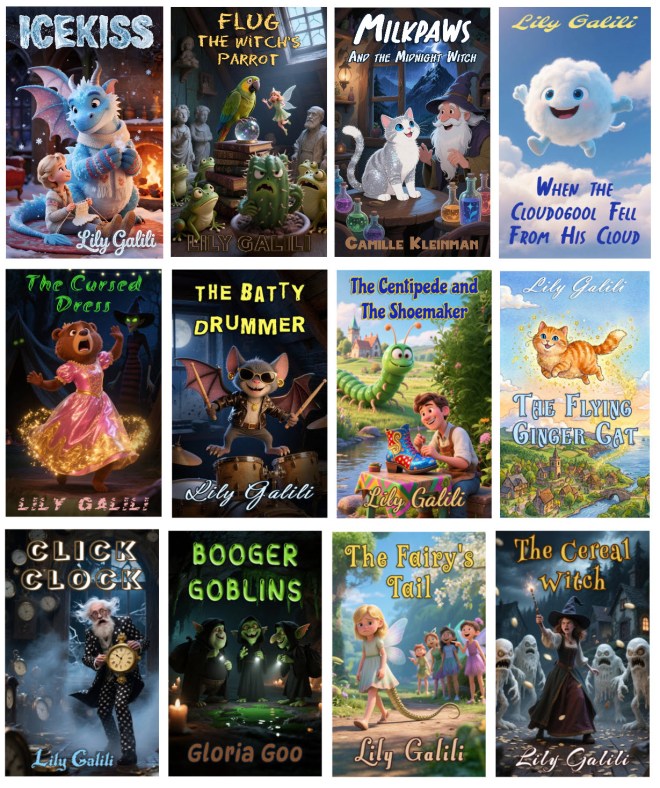
Children who enjoy magical worlds, unusual creatures, and unexpected adventures can explore original stories such as The Flying Ginger Cat, IceKiss, The Cursed Dress, Flug the Witch’s Parrot, and The Cloudogool.
The collection also includes funny and whimsical stories such as The Booger Goblins, offering a range of imaginative themes to explore.
Our original stories are available in bilingual English-Spanish and Spanish-only editions, giving teachers options for different levels of Spanish comprehension.
Funny, Whimsical, and Imaginative Tales
Not every story needs to be a traditional fairy tale. Funny situations, unusual characters, and imaginative adventures can capture children’s attention in different ways.
You can choose a story based on what your students enjoy, then use it for listening, reading comprehension, creative projects, or class discussion.
As the library grows, there will be more stories to explore and more opportunities to build engaging Spanish lessons around them.
Explore the library: Discover free Spanish stories for kids.
A Simple Routine for Teaching Spanish Through Stories
You can introduce story-based learning without replacing your existing curriculum. Start with one story and use it in different ways throughout the week.
Day 1: Read and enjoy. Introduce the story and let children follow the characters and events. Invite them to share their first impressions.
Day 2: Listen and notice. Play the audiobook or revisit the written story. Encourage students to notice familiar words and follow the plot.
Day 3: Explore comprehension. Ask questions about the characters, setting, problem, and solution. Use pictures or sequencing activities where helpful.
Day 4: Create something. Let students draw a scene, act out an event, or invent a different ending.
Day 5: Revisit the story. Ask children what they remember, which part they enjoyed, and which Spanish words they recognize. Give more experienced learners an opportunity to summarize or discuss the story in Spanish.
This routine provides repetition without making every lesson feel identical. It also gives you several ways to observe what students understand.
You can adapt the tasks for younger or older children, beginners or advanced learners, and different classroom settings.
Make Spanish Lessons Something Children Look Forward To
Learning a language takes time, but the experience does not have to revolve around memorization, repetitive exercises, or constant frustration.
When children encounter Spanish through stories they enjoy, they have a reason to listen, read, follow the meaning, and return for more. Bilingual stories make that experience accessible even when their vocabulary is still developing, while Spanish-only stories offer opportunities to work more directly with the language as their skills grow.
For teachers, stories provide a flexible foundation for reading comprehension, listening practice, creative activities, and mixed-level teaching. They can help make lessons more engaging and give children more opportunities to encounter Spanish in meaningful contexts.
Explore LingoLina’s free Spanish learning materials:
With LingoLina’s bilingual and Spanish-only stories, audiobooks, puzzles, coloring sheets, and play ideas, you can bring more imagination, variety, and natural language exposure into your Spanish lessons.
Let children discover Spanish through stories they genuinely want to hear, read, and explore.
Frequently Asked Questions
Where can I find free Spanish stories for 10-year-old kids?
LingoLina offers a growing library of free children’s stories in bilingual English-Spanish and Spanish-only editions. The collection includes classic fairy tales, original fantasy adventures, funny stories, and imaginative tales. You can explore them through the free Spanish learning library.
What is the easiest way to teach Spanish to a 10-year-old?
Start with material the child can understand and enjoy. Stories provide meaningful context for vocabulary and sentence patterns. Bilingual stories can be especially helpful for beginners because the English sentence establishes the meaning before the child encounters the Spanish version.
Are bilingual Spanish stories suitable for complete beginners?
Yes. In LingoLina’s NeuroFluent™ Immersion Method, each sentence appears first in English and then in Spanish. This helps beginners follow the story without needing to know the Spanish vocabulary in advance.
Can bilingual stories help advanced Spanish learners, too?
Yes. More experienced learners can use bilingual stories to encounter new vocabulary, notice sentence structures, and strengthen comprehension. Teachers can also challenge them with more advanced tasks, such as summarizing the story in Spanish or discussing characters’ motivations.
How can I teach Spanish to children with different ability levels?
Choose a story everyone can follow, then adapt the activity. Beginners might identify characters or sequence pictures, while more advanced learners summarize events, answer detailed questions, or create a new ending in Spanish. This allows children to share the same story while working toward different goals.
How can I make Spanish lessons fun without worksheets and vocabulary drills?
Use stories as the starting point for listening, discussion, drawing, acting, predictions, and creative writing. You can revisit the same story through different activities, giving children repeated exposure to Spanish without relying on drills as the main learning experience.
Can stories support Montessori-inspired Spanish learning?
Stories can complement Montessori-inspired activities when children have opportunities to choose materials, explore independently, revisit familiar content, and respond through purposeful activities. Teachers can combine bilingual stories with picture sequencing, drawing, and other hands-on tasks.
Can I use bilingual stories in a Waldorf-inspired classroom?
Yes. Bilingual stories can complement imaginative storytelling, artistic expression, drawing, and role-play. The English sentence provides meaning support, while the Spanish sentence introduces the language in the context of the story.
Do children need to understand every Spanish word to be ble to learn from a story?
No. Students can follow the overall meaning without knowing every word. Bilingual stories provide additional support by making the meaning of each sentence clear, while repeated exposure gives learners more opportunities to recognize unfamiliar vocabulary and sentence patterns.
What free Spanish teaching materials does LingoLina offer?
LingoLina’s free membership includes a growing collection of bilingual and Spanish-only stories, word puzzles, coloring sheets, and game and play ideas. These materials can be used for reading, listening, comprehension activities, and creative classroom projects.


