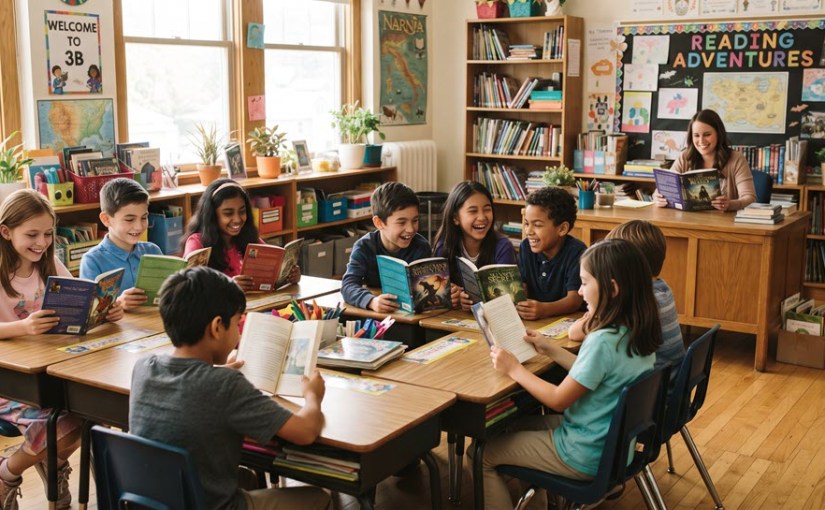
Teach Kids Spanish the Fun Way!
Teaching Spanish to 8- and 9-year-olds is a lot more enjoyable when children learn through exciting stories and natural language immersion. Instead of relying on endless vocabulary drills and grammar worksheets, you can use free Spanish stories, bilingual English-Spanish stories, and audiobooks to help your students understand and absorb Spanish in context.
When children enjoy a good story, they look forward to the next lesson. Stress dissolves, mental learning blocks crumble, and they become eager and willing to learn the language. This creates a happy, calm, stress-free learning environment where language learning takes place easier and faster.
If you’re looking for free Spanish teaching resources for Grade 3, engaging stories for elementary Spanish learners, or fun ways to teach Spanish to children who are just starting out, you’re in the right place.
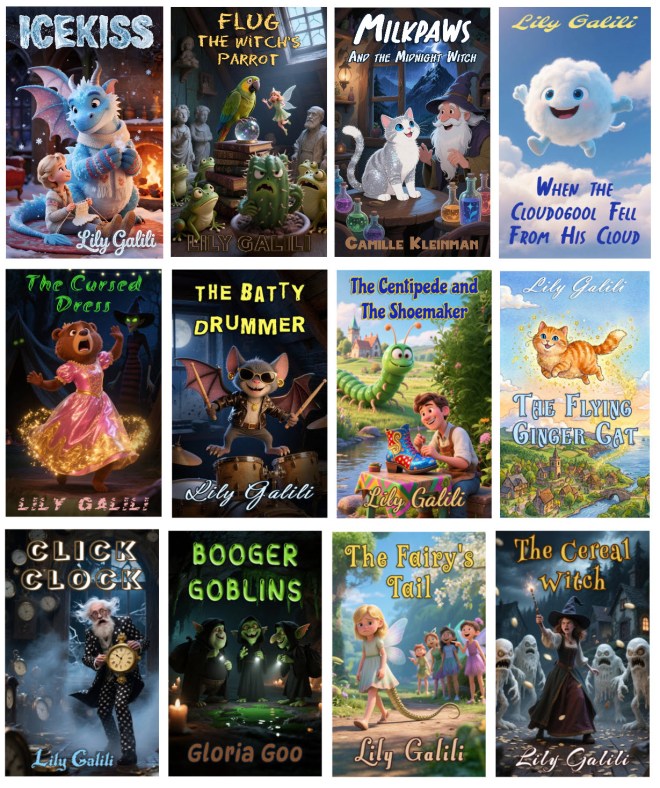
LingoLina™ offers a growing library of free bilingual English-Spanish and Spanish-only children’s stories, including written stories and audiobooks you can incorporate into your classroom. These resources let you build Spanish reading and listening comprehension while giving students something genuinely enjoyable to follow.
Go here to access our growing library of free Spanish stories and teacher resources.
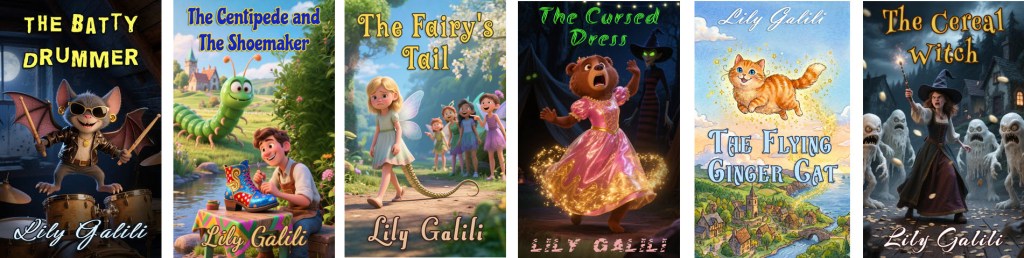
Keep reading to explore how to use stories to make Spanish lessons more engaging, and how to adapt storytime for different children’s proficiency levels.
Teacher Resources: Free Spanish Stories for 3rd Grade
LingoLina’s original story collection includes bilingual English-Spanish stories and Spanish-only versions, with written stories and free-to-listen audiobooks.
These resources are particularly useful for teachers who want to combine reading, listening, and natural language immersion.
Here’s how you can use the different formats in your classroom:
- Bilingual English-Spanish stories: Ideal for beginners who need help understanding the meaning of new Spanish words and sentences.
- Spanish-only stories: Useful for students who already understand some Spanish and are ready for more immersive reading and listening.
- Written stories: Great for shared reading, independent reading, partner activities, and reading comprehension.
- Audiobooks: Helpful for listening comprehension, pronunciation awareness, and exposure to the rhythm of spoken Spanish.
Explore LingoLina’s free Spanish resources for kids for materials to support children’s Spanish language learning and make the experience feel easy and fun.
You can build a story-centered Spanish lesson around resources you can access for free.
Why Use Stories to Teach Spanish to 8- and 9-Year-Olds?
Third grade is an excellent time to make language learning more adventurous. Children around this age can enjoy longer stories, follow characters through a sequence of events, predict what might happen next, and discuss what they have read or heard.
Stories give Spanish words a purpose. Instead of encountering a list of unrelated vocabulary, children hear and read language as part of an unfolding narrative.
Consider the difference between memorizing the Spanish word bosque (forest) and hearing a story about a child who enters a mysterious forest.
In the story, the forest becomes a place. Something happens there. A character reacts to it. The word acquires meaning through the situation rather than appearing in isolation.
This is one reason story-based language learning can be so engaging. Children have a reason to pay attention because they want to know what happens next.
Stories help children understand Spanish vocabulary in context
When students encounter unfamiliar Spanish words in a story they can follow, they have clues to help them understand the meaning.
Characters, actions, descriptions, and events all contribute to comprehension. As children encounter familiar words repeatedly across different stories, they have more opportunities to recognize them and become comfortable with their use.
Stories expose students to natural Spanish sentence structures
Children need exposure to complete sentences, not just individual words.
A story naturally includes verbs, nouns, adjectives, questions, descriptions, and different sentence structures. Students can become familiar with these patterns through repeated encounters without having to analyze every grammatical rule.
For example, a character might say Tengo miedo (I’m afraid) in one story and Tenía miedo (I was afraid) in another. Students encounter different forms as part of meaningful communication.
Explicit grammar instruction can still have a place in the curriculum. Stories simply give students a rich source of meaningful language to complement it.
Stories make room for imagination and emotion
A funny character, an unexpected discovery, or a suspenseful adventure gives children something to think about beyond the language itself.
Research suggests that stories engage processes involved in attention, imagination, and memory. For example, Speer and colleagues (2009) found that reading narratives about actions activated brain systems associated with visual and motor experiences.
For Spanish teachers, the practical takeaway is straightforward: stories can give new vocabulary a meaningful context that isolated drills often lack.
What Are LingoLina’s Bilingual English-Spanish Stories, and How Do They Work?
Bilingual stories can be especially helpful when teaching Spanish to beginners.
However, not all bilingual books present translations in the same way. Some place English and Spanish in separate columns or on facing pages.
LingoLina uses its patent-pending NeuroFluent™ Immersion Method, which presents each sentence in the learner’s familiar language immediately followed by its Spanish equivalent. In this case, each sentence appears first in English and then in Spanish. The student understands the idea in English before encountering the same idea in Spanish.
For example:
The little rabbit ran into the garden.
El conejito corrió al jardín.
A student who doesn’t yet know Spanish can understand the event before hearing or reading the Spanish sentence. The English sentence provides immediate context for the Spanish words.
This makes the story accessible without requiring children to stop after every unfamiliar word to consult a dictionary.
Why sentence-by-sentence English-Spanish bilingual reading is useful in the classroom
The format offers several practical advantages:
- Immediate comprehension: Beginners can follow the plot even when they know very little Spanish.
- Clear connections between languages: Students can see how a complete idea is expressed in English and Spanish.
- Natural exposure to grammar: Children encounter words and grammatical structures as part of complete sentences.
- Less interruption: Teachers can keep reading instead of stopping repeatedly to explain unfamiliar vocabulary.
- Flexible participation: Students at different levels can follow the same story while getting different amounts of Spanish exposure from it.
This approach is particularly helpful when a teacher has students with varying amounts of previous Spanish experience.
Rather than expecting every child to understand a Spanish-only text from the beginning, you can provide enough context for everyone to participate.
How to Use Free Bilingual Spanish Stories in a Grade 3 Classroom
You don’t need to turn every story into a worksheet or a formal lesson. A short, purposeful storytelling activity can support reading, listening, comprehension, and speaking while keeping the story itself at the center.
Here are six ways to incorporate free bilingual stories into your Spanish teaching.
1. Start with a bilingual story read-aloud
Choose a story that suits your students’ interests. Fairy tales, funny adventures, animals, mysteries, and imaginative characters can all provide engaging contexts for language exposure.
Read the English sentence, followed by the Spanish translation, allowing students to hear the connection between the two.
If an audiobook is available, play the recording so students can hear the Spanish spoken aloud.
Encourage students to follow the story rather than trying to memorize every new word. The immediate goal is to understand and enjoy the narrative while becoming familiar with the Spanish.
Time: Approximately 10–15 minutes, depending on the story and your class.
2. Let students predict what happens next
Pause at an interesting moment and ask questions such as:
- What do you think the character will do next?
- Why did the character make that decision?
- What might happen if the character enters the cave?
- Which character do you think will solve the problem?
Students can answer in English initially if their Spanish is limited. More advanced learners can try answering in Spanish.
This activity gives students a reason to listen carefully and think about the story’s meaning.
3. Listen to the audiobook and follow the written story
Combining written text with audio gives students opportunities to connect the Spanish words they see with the sounds they hear.
You might begin with a bilingual story so that beginners can follow the meaning easily. Students can then listen again, focusing more closely on the Spanish sentences.
Over time, this kind of repeated exposure can help students become more familiar with Spanish pronunciation, rhythm, and sentence patterns.
It also provides a useful option for classrooms where students have different reading abilities.
4. Turn the story into a mini theater performance
Choose a short scene with several characters and invite students to act it out.
They could pretend to be animals in a forest, explorers discovering a hidden treasure, or characters meeting for the first time.
Students can use simple props, facial expressions, gestures, and movement to bring the story to life.
For beginners, acting out the scene does not require fluent Spanish. They can start by understanding the story and repeating a few lines. Students with more experience can take on longer parts or improvise their own dialogue.
The objective is to make Spanish part of an experience rather than another set of words to memorize.
5. Create a story map together
After reading a story, ask students to identify the main character, setting, problem, important events, and ending.
They can draw a picture for each part and label it in Spanish.
For example, a story map might include:
- El personaje (the character)
- El lugar (the setting or place)
- El problema (the problem)
- El final (the ending)
Students can discuss their drawings in English or Spanish, depending on their proficiency.
This activity combines storytelling with reading comprehension and gives students a visual reminder of the story’s meaning.
6. Revisit favorite stories
Children do not have to read a different story every time they encounter Spanish.
Rereading a favorite story or listening to it again gives students another opportunity to recognize words and sentence patterns. What seemed unfamiliar during the first reading may become easier to understand during the second or third.
You can change the activity each time. First, read for enjoyment. Next, listen for familiar Spanish words. Later, ask students to retell the plot or act out a scene.
The story stays the same, but the students have new opportunities to engage with it.
Should You Use Bilingual Stories or Spanish-Only Stories?
Both formats can be useful for teaching Spanish to third graders. The best choice depends on how much Spanish your students already understand and how comfortably they can follow the material.
| Resource | Best use |
|---|---|
| Bilingual English-Spanish stories | Beginners, intermediates, and students who need clear support with meaning |
| Spanish-only stories | Late intermediate to advanced learners. Students who can follow simpler Spanish narratives without translation support and are ready for more immersion |
| Written stories | Reading practice, shared reading, independent work, and visual reference |
| Audiobooks | Listening comprehension, pronunciation awareness, and spoken-language exposure |
| Stories with audio and text | Connecting written Spanish with spoken Spanish |
For complete Spanish beginners
Start with bilingual stories. Students can understand the plot without already knowing Spanish vocabulary, making it easier to participate from the beginning.
For students with some Spanish experience
Continue using bilingual stories for new or more complex material. You can also introduce short Spanish-only stories with familiar themes and manageable vocabulary.
For more confident learners
Offer Spanish-only stories that provide a suitable challenge. Students can read independently, listen to the audiobook, or summarize what happened.
You don’t have to move the entire class to Spanish-only material at once. Different groups can work with different formats, or the class can explore a bilingual story together before moving on to a Spanish-only version.
The important thing is that students can follow enough of the story to remain engaged and understand what is happening.
Fun Spanish Teaching Resources Beyond Worksheets
If you’re searching for engaging Spanish activities for elementary students, stories can serve as the starting point for a variety of classroom experiences.
Here are a few additional ideas that require little preparation.
Story character guessing game: Describe a character from a story and let students guess who it is. As their Spanish develops, include more Spanish descriptions.
Draw the scene: Read a passage and ask students to draw what they imagine. They can compare their illustrations and discuss the details they noticed.
Story sequencing: Give students pictures or short descriptions of key events and ask them to put the events in the correct order.
Spanish listening detective: Play a short section of an audiobook and ask students to listen for a familiar word, a character’s name, or a particular event.
Change the ending: Invite students to imagine a different ending. Beginners can draw it and explain their idea in English, while more advanced learners can describe it in Spanish.
Story recommendations: Let students recommend their favorite stories to classmates. They can explain what they liked about a character, a funny moment, or an unexpected twist.
These activities build on the same central resource: meaningful language presented through a story children want to understand.
They can also be adapted for whole-class instruction, small groups, language centers, or independent activities.
How to Teach Spanish to Children Without Making Every Lesson Feel Like a Lesson
Teachers still need to meet curriculum objectives, assess progress, and ensure that students develop the necessary skills. Story-based learning can help make that work more engaging.
Instead of beginning every lesson with a list of vocabulary words, consider beginning with a story.
Rather than introducing every grammar rule before students encounter it, let them hear and read complete Spanish sentences in context. You can explain a particular structure when it supports your teaching goals, then give students more opportunities to encounter it naturally.
For example, if your class is working on describing people, choose a story with memorable characters. Students can notice how the characters are described, draw their own characters, and use similar sentence structures to describe them.
If your objective is listening comprehension, use an audiobook and ask students to identify the main events.
If your objective is reading comprehension, let students read the written story and explain what happened.
One resource can support several learning objectives without requiring a completely separate activity for each one.
This approach also gives students a more meaningful reason to encounter new language. They are following a character, understanding an event, or discovering what happens next.
How Often Should Students Listen to or Read Spanish Stories?
Consistency matters more than turning storytime into a long, exhausting session.
A teacher might incorporate a short story into several lessons each week, depending on the class schedule and curriculum. Some sessions can focus on listening, others on reading, and others on discussing or acting out the story.
A simple weekly routine could look like this:
Monday: Introduce a bilingual story and read it together.
Tuesday: Listen to the audiobook and discuss the main events.
Wednesday: Reread a favorite passage and create a story map.
Thursday: Act out a scene or play a story-based guessing game.
Friday: Revisit the story and let students share their favorite moment or retell the plot.
This is only one possible routine. You can shorten it, spread it across more lessons, or use a different story each week.
Repeated exposure helps students become more familiar with the language, while varied activities give them different ways to engage with the same material.
Free Spanish Stories for Your Classroom: Explore LingoLina
Finding quality Spanish teaching resources that are free, engaging, and suitable for different proficiency levels can take time.
LingoLina™ provides free bilingual English-Spanish and Spanish-only children’s stories, including written stories and audiobooks you can listen to for free.
The stories use LingoLina’s patent-pending NeuroFluent™ Immersion Method, presenting each sentence in English before its Spanish equivalent. This sentence-by-sentence format helps learners understand the meaning while hearing and reading the target language.
For teachers, this creates a practical way to introduce Spanish stories to beginners without expecting them to understand an entire Spanish-only text immediately.
You can use the resources for classroom read-alouds, listening activities, independent reading, small-group work, or story-based games.
As students develop their comprehension, you can also introduce Spanish-only stories to give them more direct exposure to the language.
Explore our FREE Spanish and bilingual stories and activities for kids.
Start with a story that suits your students’ interests, play the audiobook if available, and let the adventure begin.
Frequently Asked Questions About Teaching Spanish to 3rd Graders
Where can I find free Spanish stories for 3rd grade?
You can find free Spanish learning stories at LingoLina’s children’s story library. It includes bilingual English-Spanish and Spanish-only stories, with written stories and audiobooks available to listen to for free.
What are the best Spanish books for 8- and 9-year-olds?
The best books depend on students’ Spanish proficiency, reading ability, and interests. Bilingual stories are useful for beginners because they provide immediate meaning, while Spanish-only stories can help students who already understand some Spanish develop greater reading and listening comprehension.
How can I teach Spanish to children who don’t know any Spanish?
Start with comprehensible material that allows children to understand the meaning. Bilingual stories are particularly helpful because each English sentence is followed by its Spanish translation. Children can follow the plot from the beginning while becoming familiar with Spanish words, sounds, and sentence structures.
Are bilingual English-Spanish stories good for Spanish class?
Yes. Bilingual stories can help beginners connect familiar meanings with new Spanish words and sentences. They also provide opportunities to practice reading, listening, and recognizing language patterns in context.
Are Spanish audiobooks useful for elementary students?
Yes. Spanish audiobooks provide exposure to spoken language, including pronunciation, rhythm, and intonation. Pairing an audiobook with its written story can help students connect the sounds they hear with the words they see.
How do I make Spanish lessons fun for 3rd graders?
Use engaging stories, audiobooks, role-play, drawing, storytelling games, and opportunities to predict what happens next. These activities give students a reason to listen, read, and interact with the language while keeping the lesson varied and enjoyable.
Should I teach Spanish grammar to 8-year-olds?
You can introduce grammar in age-appropriate ways, but children also benefit from hearing and reading complete sentences in meaningful contexts. Stories expose students to grammar patterns as part of natural communication. Brief explanations can complement this exposure when needed.
What is the difference between bilingual stories and Spanish immersion?
Spanish immersion generally emphasizes exposure to Spanish, often with little or no translation. Bilingual stories provide the meaning in English alongside the Spanish text. In LingoLina’s sentence-by-sentence approach, each English sentence is followed immediately by its Spanish equivalent, helping beginners understand the story while experiencing the target language.
Can I use the same Spanish story with students at different levels?
Yes. Beginners can follow the bilingual text, while more experienced students can pay closer attention to the Spanish, listen without relying as heavily on English, or retell the story in their own words. You can also give different groups different follow-up activities.
How can I teach Spanish without relying on flashcards and worksheets?
Make stories a regular part of your classroom routine. Combine reading and listening with discussion, drawing, acting, and storytelling games. These activities create opportunities to encounter and use Spanish in context. You can still use worksheets or flashcards when they serve a specific learning objective.
Make Spanish Learning an Adventure
Children don’t have to memorize long vocabulary lists before they can enjoy a Spanish story. With the right support, even beginners can follow a narrative, discover new words, and become more familiar with how Spanish works.
For Grade 3 teachers, bilingual stories, Spanish-only reading material, and audiobooks offer flexible ways to make language learning more engaging. You can use them to support reading, listening, comprehension, and classroom interaction while giving students a reason to keep coming back to Spanish.
Explore LingoLina’s free bilingual and Spanish-only stories and find a story your students will love.
A good story can turn Spanish from another school subject into a language children are curious to hear, read, and understand.


