Buddy’s Diary (All Episodes) – Cute Simple Stories for Spanish Learners

Dive into Buddy’s Diary, a relatable and funny true-story series about the life of a rescue puppy. Told from the puppy’s perspective in her cute, naive voice, each episode features amusing, touching, funny, and heartwarming real-life events. 

Smile, chuckle, sigh, and learn new Spanish words effortlessly.

Ideal for Spanish beginners and dog lovers due to the simple, natural conversational style, practical Spanish vocabulary, and easy, short sentences.

On this page, you’ll find a full list of all the episodes. Enjoy reading it for free online!

Continue reading Buddy’s Diary (All Episodes) – Cute Simple Stories for Spanish Learners

Buddy’s Diary: March 10 – Learn Spanish with Cute Easy Stories for Beginners (All Ages)

Welcome back to another fun story from Buddy’s Diary!

Buddy’s Diary is a heartwarming and humorous series that invites you into the life of a rescue puppy. These are true stories, told in Buddy’s own naive and curious voice, capturing the real-life adventures of a growing pup.

This free bilingual English-Spanish story allows you to enjoy Buddy’s journey while naturally absorbing new Spanish vocabulary. Easily learn new Spanish words and develop natural fluency through story-based bilingual immersion.

Subscribe for free to receive new stories from Buddy’s Diary as well as many more fun bilingual and Spanish stories across all genres and levels!

Enjoy this free Spanish learning story from Buddy’s Diary below.

Continue reading Buddy’s Diary: March 10 – Learn Spanish with Cute Easy Stories for Beginners (All Ages)

Buddy’s Diary: March 12 – Easy English-Spanish Story for Beginners

Buddy’s Diary is a heartwarming and humorous series that invites you into the life of a rescue puppy. These are true stories, told in Buddy’s naive and curious voice, capturing the real-life adventures of a growing pup.

This bilingual English-Spanish story allows you to enjoy Buddy’s journey while naturally learning new Spanish vocabulary.

Simply by reading the bilingual story, you’ll effortlessly expand your Spanish comprehension, reading skills, and develop fluency over time through story-based bilingual Spanish immersion.

Subscribe for free to receive new funny bilingual stories from Buddy’s Diary, as well as many more exciting Spanish stories across all genres and levels!

Read a free story from Buddy’s Diary below to improve your Spanish:

Continue reading Buddy’s Diary: March 12 – Easy English-Spanish Story for Beginners

Buddy’s Diary: March 14 – Free Cute Simple Story to Learn Spanish Easily

Buddy’s Diary is a heartwarming and humorous series that invites you into the life of a rescue puppy. These are true stories, told in Buddy’s own naive and curious voice, capturing the real-life adventures of a growing pup.

This bilingual English-Spanish story allows you to enjoy Buddy’s journey while naturally absorbing new Spanish vocabulary. By reading each story first in English and then in Spanish, you’ll expand your Spanish comprehension and reading skills through immersive, story-based bilingual learning.

Subscribe for free to receive new episodes of Buddy’s Diary as well as many more fun bilingual stories across all genres and levels!

Read a free story from Buddy’s Diary below to improve your Spanish.

In this episode, Buddy encounters a tiny “human puppy” for the first time. Both frighten each other during their initial encounter, and they almost give up on being friends.

Continue reading Buddy’s Diary: March 14 – Free Cute Simple Story to Learn Spanish Easily

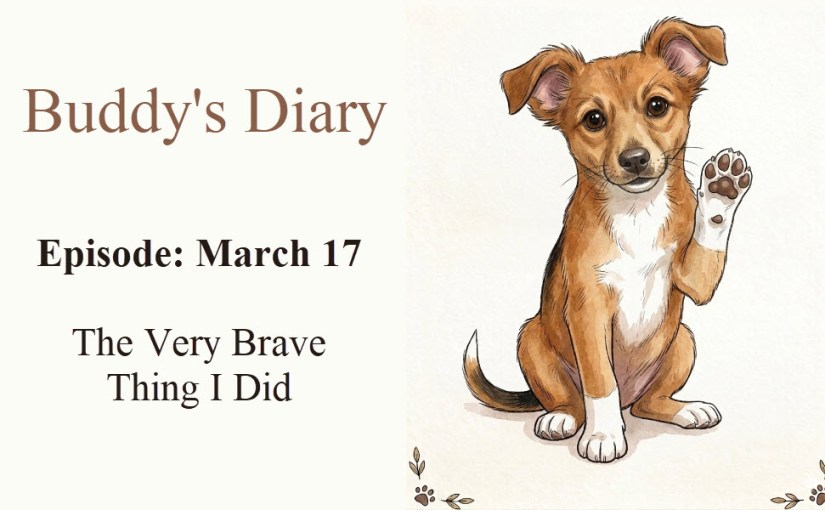
Buddy’s Diary: March 17 – Cute Simple Bilingual Story to Learn Spanish Easily

Welcome to another free bilingual story to help you learn Spanish in an easy, fun way!

Buddy’s Diary is a heartwarming, humorous, true story of a rescue puppy’s life told from her eyes.

Growing up is hard work, especially when the world is full of giant, slippery white mountains called “stairs.” In today’s diary entry, Buddy finally conquers her greatest fear and bravely faces a big, noisy, mysterious threat outside her door while Girl rests in bed.

Each sentence appears first in English so you can easily follow along, and is then repeated in Spanish. Simply read to naturally expand your vocabulary and learn new Spanish words without studying.

Enjoy this episode of Buddy’s Diary and subscribe for many more fun Spanish learning stories!

Continue reading Buddy’s Diary: March 17 – Cute Simple Bilingual Story to Learn Spanish Easily

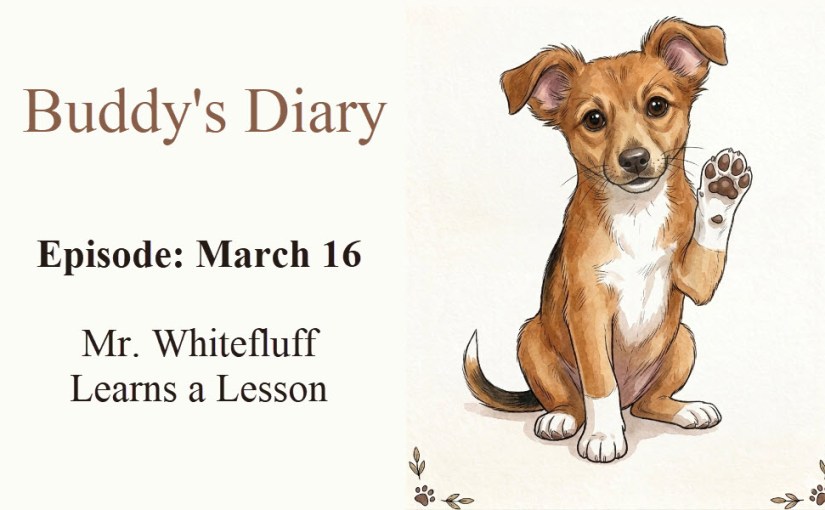
Buddy’s Diary: March 16 – Free Sweet Simple Bilingual Story to Learn Spanish

Buddy’s Diary is a heartwarming and humorous series that invites you into the life of a rescue puppy. These are true stories, told in Buddy’s own naive and curious voice, capturing the real-life adventures of a growing pup.

This bilingual English-Spanish edition allows you to enjoy Buddy’s journey while naturally absorbing new Spanish vocabulary. By following along with these authentic, funny, and cute life events, you’ll expand your Spanish comprehension and reading skills through immersive, story-based bilingual learning.

Subscribe for free to receive new free episodes of Buddy’s Diary as well as many more fun bilingual stories across all genres and levels!

Read a free story from Buddy’s Diary below to improve your Spanish:

Continue reading Buddy’s Diary: March 16 – Free Sweet Simple Bilingual Story to Learn Spanish

What Science Says about Teaching Kids Spanish with Stories

Parents searching for the best way to teach kids Spanish usually land on flashcards and vocabulary drill sheets.

The problem is that children do not store Spanish words as tidy lists. That’s not the natural way any human learns their first language, and it’s not an easy way to learn their second.

The fastest and easiest way for kids to learn Spanish vocabulary is through meaning, imagery, emotion, patterns, and natural repetition inside stories that they actually enjoy.

Let’s dive into what neuroscience, brain studies, linguistic experts, and researchers say about teaching kids Spanish with stories and what makes it so effective.

Continue reading What Science Says about Teaching Kids Spanish with Stories

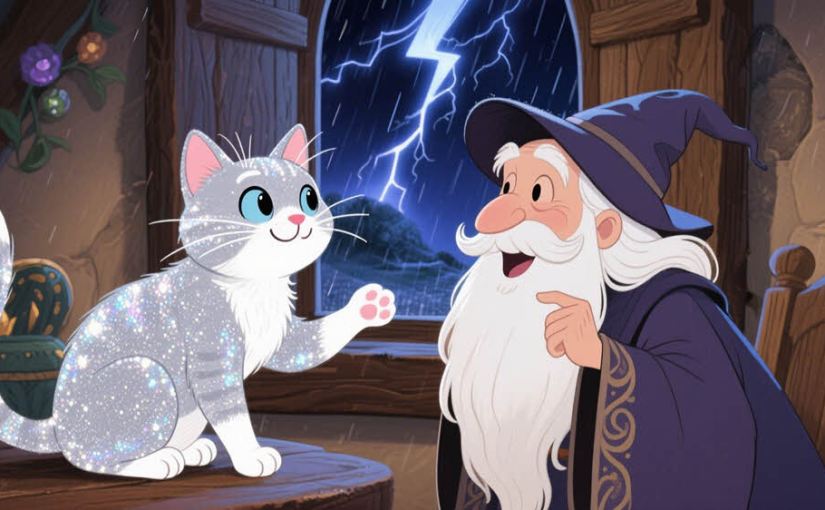
Milkpaws and the Midnight Witch – Free Simple Short Bilingual Story to Learn Spanish

Milkpaws is a cute bilingual story about the adventures of an old wizard’s smart cat.

Written in simple Spanish, this Spanish-English story is ideal for beginners and young kids learning Spanish.

Bilingual stories make learning Spanish easy and fun. You can read more about hte science behind bilingual stories for language learning here.

To effortlessly grow your Spanish vocabulary and become fluent in Spanish, spend 10+ minutes each day reading a bilingual story.

Enjoy the story of Milkpaws!


Continue reading Milkpaws and the Midnight Witch – Free Simple Short Bilingual Story to Learn Spanish

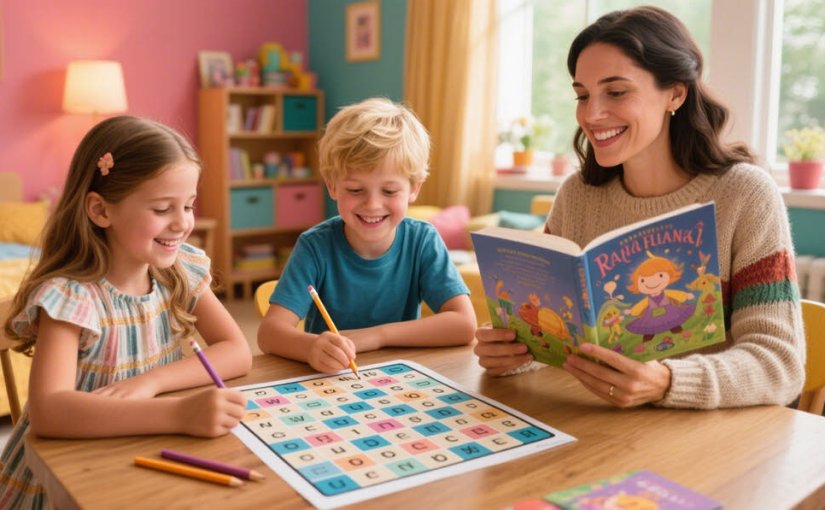
How to Teach Your Kid Spanish Vocabulary with Free Fun Word Search Games

Teaching Spanish vocabulary to kids is one area where parents often feel stuck. It is easy to assume that vocabulary learning must involve drills or memorization, because that is how most of us were taught languages in school.

But children learn in the opposite way.

Their brains thrive on play, movement, discovery, and fun challenges.

The more a child enjoys an activity, the more their memory opens up and absorbs new Spanish words naturally.

That is why Spanish word games for kids are so effective. They give the brain exactly the kind of stimulation it loves. No stress. No pressure. No guilt. Just exploration, curiosity, and small moments of pride with each new Spanish word discovered.

In this guide, we’ll share how best to use word puzzle games, in what order, when, and how much in order to teach your kid Spanish vocabulary in a way that’s fun, easy, and sticks in their memory.

Continue reading How to Teach Your Kid Spanish Vocabulary with Free Fun Word Search Games

How to Easily Teach Spanish to Your Child Based on Their Learner Type

If you’re trying to teach your child Spanish and ever wondered they light up sometimes and tune out other times, it might not just be about mood or interest. It might be about how their brain is wired to learn.

Understanding your child’s learning style can make a massive difference in how well they absorb Spanish, how fast they learn it, how much they struggle, or how much they enjoy it.

Some kids learn Spanish best by seeing. Others by hearing. Others by doing, touching, or moving.

The good news? There are methods that work for all of them. And in this guide, we’ll break it all down.

Continue reading How to Easily Teach Spanish to Your Child Based on Their Learner Type

The Science Behind Bilingual Stories for Teaching a 7-Year-Old Spanish

If you’ve ever tried teaching your 7-year-old Spanish and watched their eyes glaze over after ten flashcards or one grammar lesson, you already know something’s off.

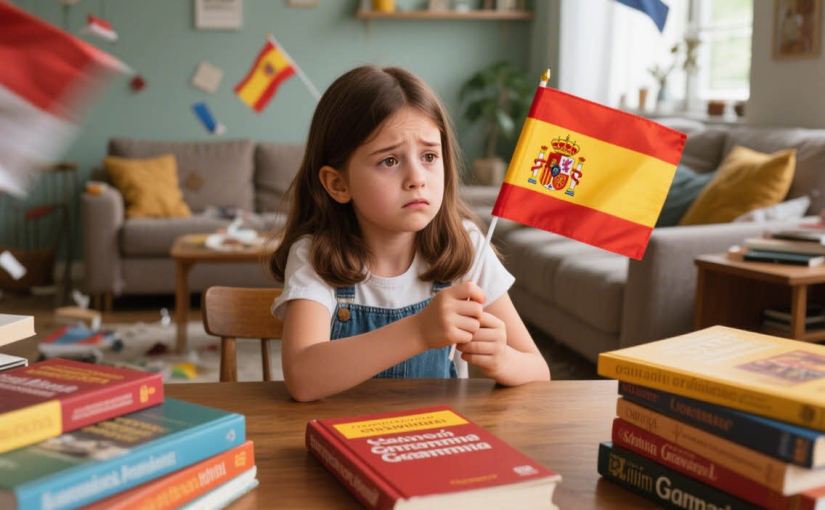
Maybe you downloaded a vocab app with bright colors, a cute squirrel, and silly sounds. Maybe you printed colorful worksheets full of conjugation tables. Or maybe you bought a Spanish grammar workbook designed for kids.

And maybe, just maybe, you found yourself thinking, “Even I find this boring… how is my 7-year-old supposed to enjoy it?”

The truth is, they probably won’t. And science is on their side.

There’s a better way to teach Spanish. A way that’s more fun and far more effective, especially at age 7.

It’s called bilingual story learning. And it works better than Spanish lessons, drills, grammar rules, and isolated vocab lists because it works with your child’s brain and development stage, not against it.

Let’s dig into why.

Continue reading The Science Behind Bilingual Stories for Teaching a 7-Year-Old Spanish

How to Turn Your Child Into Your Spanish Teacher (And Why It Works Better Than Traditional Lessons)

A Silly, Brilliant, Confidence-Boosting Way to Learn Spanish Together

Some children freeze the moment Spanish feels like a “lesson”. The moment a parent holds Spanish flashcards in one hand and has that polite “okay sweetheart, what’s this word” voice, kids tighten up. Suddenly it feels like a test. And tests make small shoulders heavy.

Yet those same children light up the moment the roles flip and they get to be the Spanish teacher. Kids love having power. They love instructing, correcting, explaining, and being the “expert” for a change. It feels exciting. It feels grown up. And it removes all the pressure from learning Spanish.

So here’s the secret technique that parents don’t realize is a superpower:
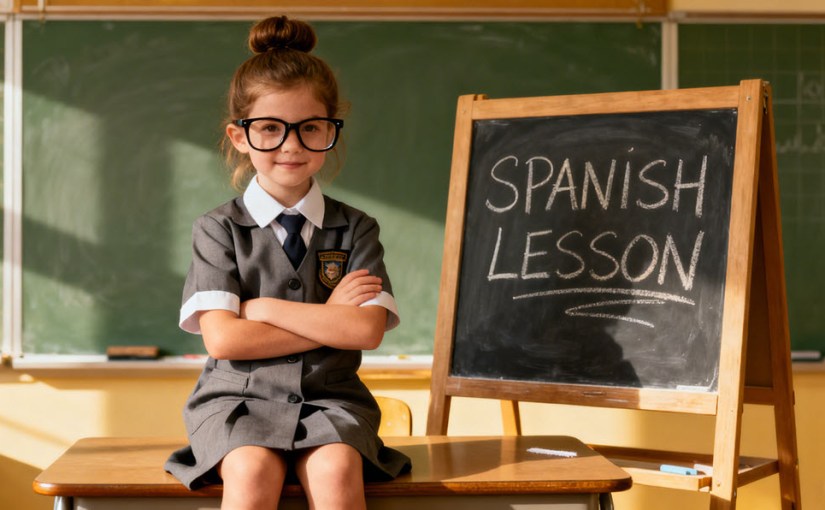
Let your child become your Spanish teacher.

Yes. Let them stand on a chair, hold a clipboard, wear glasses they don’t need, and announce, “Good afternoon, class.” Let them grade your worksheets. Let them quiz you on flashcards. Let them circle the words in the word search while you pretend to struggle spectacularly.

They will learn more Spanish while pretending to teach you than they ever learned from being tested or drilled by you.

Let’s talk about how to do this in a fun, silly, structured way, and why the psychology behind it works so incredibly well.

Continue reading How to Turn Your Child Into Your Spanish Teacher (And Why It Works Better Than Traditional Lessons)

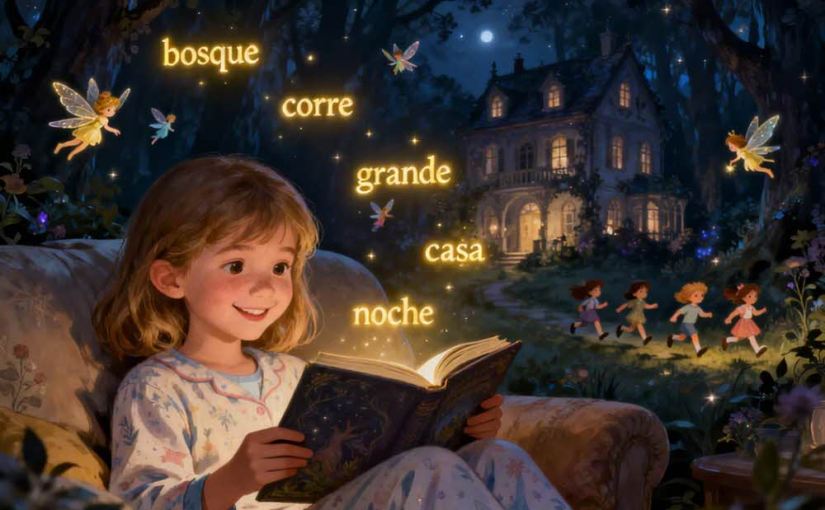
Turning Bedtime Stories Into Spanish Lessons (Without Your Child Noticing)

Discover how to turn nightly bedtime stories in Spanish (or bilingual stories) into natural language learning without effort, stress, or boring lessons.

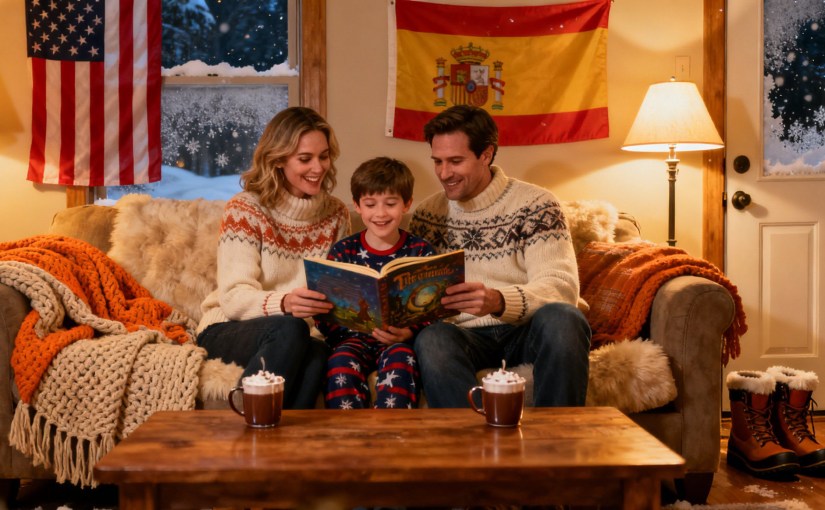
Most parents read bedtime stories to relax their kids. A warm blanket, a familiar voice, and a world of imagination. It’s the classic nighttime routine. But what if those cozy tales could secretly teach your child Spanish, without a single quiz, worksheet, or lesson plan?

Turns out, they absolutely can.
And bedtime is the perfect moment to sneak Spanish into your child’s brain, softly and powerfully.

In this guide, you’ll learn how reading bilingual English-Spanish kids stories at night transforms into real language absorption using proven neuroscience, emotional connection, and zero stress.

Continue reading Turning Bedtime Stories Into Spanish Lessons (Without Your Child Noticing)

How to Measure Your Child’s Spanish Progress with Bilingual Stories

If you’re teaching your child Spanish at home, you might wonder:
Is it working? Are they really learning?

When you skip flashcards, grammar drills, and stressful testing in favor of bilingual stories, tracking progress might feel less obvious. But make no mistake: your child is learning, and the signs are easy to spot once you know what to look for.

In this guide, we’ll walk through how to measure your child’s Spanish learning progress using bilingual stories.

Whether you’re using bedtime tales, storytime rituals, or audio stories on the go, this article will give you a clear month-by-month roadmap to see results, without pressure or tests.

We’ll also cover the science behind story-based learning, common parent questions, and why this method is one of the easiest, most brain-friendly ways to teach kids Spanish naturally.

Continue reading How to Measure Your Child’s Spanish Progress with Bilingual Stories

Why Your 7-Year-Old Forgets Spanish (And How to Fix It)

If you’ve ever spent a whole week practicing Spanish with your 7-year-old, only to hear them blank out or shrug when you ask, “What does gato mean again?” you’re not alone.

It can feel like you’re pouring water into a bucket with a hole in the bottom. They seem to understand in the moment, but by the next day? Gone. Poof. Vanished.

So, is something wrong? Are they too distracted? Too young? Not trying hard enough?

Actually, it’s none of those things. There’s a much better, science-backed explanation and an even better fix. And it starts with a part of your child’s brain that’s still under construction at age 7.

Continue reading Why Your 7-Year-Old Forgets Spanish (And How to Fix It)

Why Kids Refuse Learning Spanish and How to Make Them Fall in Love with It and Beg for More

If you’re a parent trying to teach your child Spanish and they’re refusing, saying it’s boring, they don’t want to learn it, or outright telling you they hate Spanish and asking you to speak English instead, you’re not alone. This happens in countless households.

Whether your child grew up with Spanish from birth or you’re introducing it later, resistance can hit hard. You might feel frustrated, rejected, or even worried. But there’s a reason behind this refusal, and more importantly, there are gentle, joyful ways to turn things around.

Whether you’re a Spanish-speaking parent hearing those words from your child, or you’re a non-Spanish-speaking parent trying to introduce the language at home, this can feel disheartening. You want your child to connect with their roots. Or become bilingual. Or at least be open to new cultures and opportunities. But when the response is all resistance, what then?

This article will walk you through why kids resist Spanish in the first place, what traditional approaches often get wrong, and how to flip the script. Instead of begging your child to practice Spanish, you can get them asking for more… often without realizing they’re learning at all.

Continue reading Why Kids Refuse Learning Spanish and How to Make Them Fall in Love with It and Beg for More

How to Teach Spanish to Your 7-Year-Old (Backed by Brain Science)

If you’ve ever wondered whether your 7-year-old is too young to learn Spanish, too distracted, or just not showing enough interest yet, you’re not alone.
Here’s some encouraging news: age seven comes with its own special advantages for learning Spanish.

It’s a fun, flexible time in your child’s development right between the sponge-like early years and the more logical, rule-focused stage that kicks in later.

At age 7, kids are curious, imaginative, and just starting to develop stronger reading and thinking skills. It’s the perfect moment to introduce a language through playful stories and natural immersion.

You don’t need flashcards. You don’t need grammar drills. You don’t need hours of practice. And it certainly doesn’t have to feel like more homework.

Continue reading How to Teach Spanish to Your 7-Year-Old (Backed by Brain Science)

The Best Spanish Immersion Methods for Kids: How to Make Learning Spanish Natural, Fun, and Stress-Free

For parents teaching Spanish at home, immersion is the most natural path to fluency. But there’s more than one way to do it. Some families go “Spanish-only” pure immersion, others mix English and Spanish, and many use bilingual books, songs, or shows. The right approach depends on your child’s age, level, and personality.

Let’s walk through what type of Spanish Immersion actually works, what doesn’t, and how you can create a relaxed, joyful environment where Spanish becomes part of daily life, not a homework battle.

Continue reading The Best Spanish Immersion Methods for Kids: How to Make Learning Spanish Natural, Fun, and Stress-Free