Have you ever sat down to practice Spanish with your child, only for them to completely tune out after two minutes?
Before you assume they just “aren’t interested” or that language learning isn’t for them, take a deep breath. The truth is much simpler: It’s not a lack of motivation; it’s just how their brain is wired.
Every child has a unique way of processing the world. When we force a child who loves to move to sit still with flashcards that bore them or lessons that don’t align with their natural learner type, frustration happens.
But when you match Spanish to your child’s natural learning style, something magical happens. The resistance disappears, vocabulary sticks, and learning a second language actually becomes fun.
What’s Your Child’s Spanish Learning Style?
Research shows that while most children use a mix of learning styles, one usually takes the lead. Generally, kids fall into three main buckets:
| Learning Style | How They Think | Their Catchphrase |
| Visual (~40%) | In pictures, colors, and written words. | “Can you show me?” |
| Auditory (~40%) | In sounds, rhythms, and voices. | “Can you tell me again?” |
| Kinesthetic (~20%) | In movement, touch, and emotions. | “Can I try it myself?” |
To spot your child’s style, just look at what they notice.
Do they remember the exact illustrations in a book? (Visual).
Do they repeat catchy phrases or sound effects, and enjoy listening to audiobooks or to stories read aloud? (Auditory).
Do they wiggle, squirm, and need to physically handle things to understand them? (Kinesthetic).
The easiest way to bridge the gap? Stories.
Whether your child needs to see it, hear it, or act it out, a great story does it all.
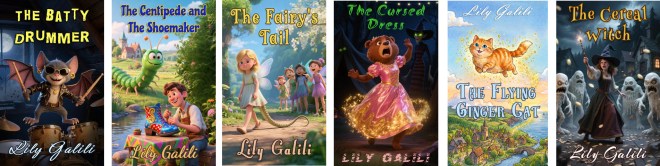
To help you get started today, download our library of 41+ FREE kids’ stories in Spanish and bilingual English-Spanish editions to make learning Spanish easy and fun.
Let’s look at how to figure out your child’s learning style and how to use these stories to unlock their inner bilingual superstar.
Here is how you can tailor storytime for each type using our free bilingual books.
1. The Auditory Learner: Learning Through Sound
Auditory learners absorb Spanish best when they hear it spoken naturally. The rhythm, tone, and melody of the language anchor new words into their long-term memory.
How to teach them Spanish: Read content out loud, talk to them, play games, sing songs, watch movies, read books, listen to audiobooks.
How to use stories: Read aloud to them! You don’t have to be perfectly fluent. Our bilingual books feature side-by-side English and Spanish text, making it incredibly easy for you to guide them through the sounds.
Pro-tip: Let them listen to Spanish audiobooks or read-alouds while they doodle, eat breakfast, or play with blocks. Background listening is a superpower for these kids.
2. The Visual Learner: Learning Through Pictures & Text
Visual learners need to see the language to understand it. Illustrations and written words provide a solid anchor for their memory.
How to teach them Spanish: Use colorful illustrations, comics, cartoons, movies, books with pretty illustrations, stories that are vividly described and easy for them to imagine in their mind, learning materials (worksheets, activity sheets, apps, flashcards) with colorful visuals and appealing imagery, games, toys, and integrate Spanish into real-world activiites such as pointing out a blue car or a brown dog and saying the words in Spanish etc.
How to use stories: When reading our bilingual books, slide your finger under the words as you say them. This helps them connect the written Spanish words with the sounds they hear.
Why bilingual books are perfect for them: The side-by-side format gives them instant clarity. They can look at the English line for context, look at the Spanish line for structure, and look at the picture for meaning—no confusion, no stress.
3. The Kinesthetic Learner: Learning Through Action
If your child can’t sit still, stop fighting it! Kinesthetic learners need movement and emotion to lock in new vocabulary. Flashcards will only frustrate them.
How to teach them Spanish: Use movement-based games, play, role-play, crafting and creative activities, art, and coloring in activities. Mix Spanish vocabulary into all the games and activities. Check out our free online course on how to teach kids Spanish through games and play.
How to use stories: Let the child play out the scenes with toys while listening to the story being read out loud. After reading, use toys or costumes to roleplay parts of the story.
During reading, you can also turn reading into a game of charades. If a character in the story is running (corriendo), jumping (saltando), or sleeping (durmiendo), have your child act out the movement when they hear the Spanish word.
Brain science shows that when a child hears an action word in a story, the motor regions of their brain light up even if they are sitting still. For kinesthetic kids, an action-packed story feels like a lived experience and satisfies their need for movement, even though it’s only imaginary movement.
Why Bilingual Stories Work for Every Learner Type
Bilingual English-Spanish stories are the ultimate all-in-one tool because they trigger all three learning pathways at once:
- They use Dual Coding: Seeing a picture or vividly imagining a scene in their mind while reading the text builds two separate memory pathways for the exact same word, making it twice as likely to stick. This works well for visual learners (they imagine the scenes), auditory learners (they can listen to the audiobook), as well as kinesthetic learners (they imagine doing the actions in the scene).
- They eliminate overwhelm, confusion, and translation anxiety: Because the English translation is right there, your child’s brain stays relaxed. A relaxed brain learns much faster than a stressed one.
- They build long-term vocabulary memory: Repeatedly seeing and hearing the same Spanish words in the context of an enjoyable story strengthens the brain’s memory centers (like the hippocampus).
Ready to Start? Grab 41+ Free Spanish & Bilingual Stories!
Teaching your child Spanish shouldn’t feel like a chore. By using stories that match how their brain naturally works, you can turn language learning into your favorite part of the day.
We want to make this as easy as possible for your family. We are giving away a massive collection of 41+ free kids’ stories in Spanish and bilingual EN-ES editions.
Whether you want to read aloud to your auditory learner, point to beautiful illustrations with your visual learner, or act out wild adventures with your kinesthetic learner, we’ve got a story they will love.
Quick Parent FAQs
Can my child have more than one learning style?
Absolutely. Most kids are a blend of all three, but keeping an eye on their dominant style helps you choose the path of least resistance.
What if I don’t speak perfect Spanish?
That is exactly why bilingual stories are so powerful. The English text is right there to guide you, allowing you and your child to learn Spanish and grow your vocabulary together.
Are flashcards bad?
No, but they tend to bore children and the words are quickly forgotten. They can benefit visual learners to some extent, however, they are still “dry” isolated words which feel boring to most kids.
Visual learners enjoy stories and learn Spanish well from stories, because they vividly imagine the scenes they hear or read in their minds. This helps the new Spanish words stick deeper in their long-term memory.
If your child is auditory or kinesthetic, swapping flashcards for active, story-based learning will usually yield much better (and happier!) results.


