Looking for free Spanish stories for kids that you can use in your homeschool? Stories are a wonderful way to bring Spanish into your child’s day, whether you’re teaching a complete beginner or helping a more experienced learner develop stronger reading and listening skills.
For children ages 8–10, the right stories can make Spanish more engaging. Fairy tales, magical adventures, funny characters, and imaginative worlds give children something interesting to read about while exposing them to the language naturally.
But finding suitable Spanish reading materials can be a challenge. Stories written entirely in Spanish may be too difficult for beginners, while materials designed for language classes can sometimes feel repetitive or overly focused on memorizing vocabulary.
At LingoLina™, we offer a growing library of free Spanish stories for kids, including both Spanish-only stories and bilingual English-Spanish stories.
Our free homeschool Spanish teaching resources also include word puzzles, coloring sheets, and game and play ideas, giving homeschool families more ways to make Spanish part of everyday learning.
Whether you’re looking for Spanish reading practice, bilingual books, Spanish homeschool materials, or fun resources to supplement your curriculum, stories offer a flexible place to start.
Where to Find Free Spanish Stories for Kids
LingoLina’s free library includes Spanish-only stories and bilingual English-Spanish stories across genres and for different ages, so you can choose the format that best suits your child’s current Spanish abilities.
Bilingual English-Spanish Stories
Bilingual stories are especially useful when children are learning Spanish but cannot yet understand a complete story in the language.
With LingoLina’s NeuroFluent™ Immersion Method, each sentence appears first in English and is immediately followed by its Spanish translation. Children understand the meaning in English before encountering the same idea in Spanish.
This means they can follow the story without needing to know every Spanish word in advance. They can enjoy the plot, hear or read the Spanish version, and gradually become more familiar with the words and sentence patterns they encounter.
The format is also useful for children who already know some Spanish. They can use the English sentence to confirm the meaning while paying closer attention to the Spanish.
Spanish-Only Stories
Spanish-only stories give children the opportunity to engage directly with Spanish without an English translation after each sentence.
These can be a good choice for learners who already understand some Spanish and want more practice reading or listening to the language itself.
Children do not need to understand every word to follow a story. They can use the context, familiar vocabulary, and events in the plot to help them understand what is happening.
As your child’s comprehension develops, you can offer a mix of bilingual and Spanish-only stories, depending on the difficulty of the material and how much support your child needs.
More Free Spanish Homeschool Materials
Stories can form the center of a Spanish learning routine, but you may also want additional activities to vary the experience.
LingoLina’s free membership includes a growing collection of:
- Children’s stories in bilingual English-Spanish and Spanish-only formats
- Word puzzles for playful language practice
- Coloring sheets inspired by children’s activities and stories
- Game and play ideas for creative learning at home
These resources can supplement your existing homeschool curriculum or give you a starting point if you’re looking for a more story-centered way to introduce Spanish.
Explore the free Spanish learning library.
Why Bilingual Spanish Stories Are Great for All Learning Levels
When choosing Spanish reading materials, it helps to consider how much of the language your child can already understand.
A story written entirely in Spanish may be enjoyable for a confident reader, but a beginner who recognizes only a few words may struggle to follow the plot. Constantly stopping to translate unfamiliar words can interrupt the experience and make reading feel like hard work.
Bilingual stories offer another way to approach Spanish learning. By presenting each sentence in English and then Spanish, they make the meaning accessible while still giving children regular exposure to the target language.
For Spanish Beginners: Understand the Story From the Start
Children do not need to memorize a vocabulary list before they can enjoy a bilingual story.
The English sentence establishes the meaning. The Spanish sentence then gives them an opportunity to connect that familiar idea with the new words and sounds.
For example, a child might read that a little cat enters a mysterious forest, followed immediately by the same sentence in Spanish. The child already understands what is happening, so they can pay attention to how the idea is expressed in Spanish.
This makes stories accessible even when a child has little or no previous knowledge of the language.
Instead of struggling to decode an entire passage, beginners can relax into the story while becoming familiar with Spanish through repeated encounters.
For Intermediate Spanish Learners: Build on What They Already Know
Children who have studied some Spanish often understand simple sentences but struggle when stories introduce unfamiliar vocabulary or more complicated sentence structures.
Bilingual stories provide support without removing the challenge of encountering new language.
Your child can recognize words they already know, use the English sentence to clarify unfamiliar ideas, and pay attention to how Spanish expresses the meaning.
As familiar words appear again in different contexts, children have more opportunities to recognize them and strengthen their understanding.
The result is a way to continue reading interesting stories without being limited to very basic Spanish texts.
For Advanced Spanish Learners: Develop More Independent Comprehension
More experienced learners can use bilingual stories to explore increasingly challenging vocabulary and sentence patterns.
They may choose to focus primarily on the Spanish sentence, referring to the English only when they need clarification. They can also summarize the story in Spanish, describe the characters, or discuss what they think will happen next.
Spanish-only stories offer another opportunity to practice understanding the language directly.
The important point is that bilingual stories are not just for beginners. The English support can remain useful whenever the Spanish content introduces new challenges, including for learners who already understand quite a lot.
For Children Who Learn Spanish at Different Speeds
Siblings learning Spanish together may have very different levels of experience. One child might be starting from scratch while another already understands simple stories.
Bilingual materials can help both children enjoy the same story. The beginner can focus on understanding the plot and becoming familiar with the Spanish, while the more experienced learner can pay closer attention to the wording or complete additional activities in Spanish.
You can also offer different stories according to each child’s interests and abilities.
This flexibility makes stories a practical addition to many homeschool routines.
How LingoLina’s NeuroFluent™ Spanish Immersion Method for Kids Works
Traditional language materials often separate vocabulary, grammar, reading, and listening into different exercises. Those activities can have a place in language education, but they are not the only way to encounter a language.
LingoLina’s NeuroFluent™ Immersion Method centers on stories and paired sentences. Each sentence is presented first in the learner’s native language and then in the target language.
The English sentence provides immediate context. The Spanish sentence connects that familiar meaning with Spanish words, sounds, and sentence patterns.
Over time, repeated exposure can give children more opportunities to recognize vocabulary, notice how sentences are formed, and become familiar with spoken Spanish.
Stories also provide context for understanding words. A word encountered during an adventure, for example, is connected to a character, an action, or a place. When it appears again, the child has another opportunity to recognize it.
The method is designed to make language learning more understandable and enjoyable without making grammar charts, flashcards, or vocabulary drills the center of the experience.
It does not mean every child will learn at the same pace or that stories alone guarantee fluency. Regular exposure, suitable materials, and opportunities to engage with the language all matter. However, making stories understandable gives children a practical way to spend more time with Spanish without needing to translate every unfamiliar word themselves.
How to Use Free Spanish Stories in Your Homeschool
One advantage of story-based Spanish learning is that a single story can support several different activities. You do not need to prepare a completely separate lesson for every skill.
Here are some simple ways to use free Spanish stories as part of your homeschool materials.
1. Make Story Time Part of Your Routine
Choose a story that interests your child and set aside time to read or listen together.
With a bilingual story, your child can follow the meaning in English and then encounter the Spanish sentence. You can pause occasionally to talk about the characters or ask what might happen next, but there is no need to turn every page into a quiz.
The goal is to build a positive, regular connection with Spanish.
2. Combine Reading and Listening
Reading helps children see Spanish words, while audiobooks give them opportunities to hear how the language sounds.
If you have a story in both written and audio formats, try reading along while listening. Your child can follow the text and become more familiar with the pronunciation and rhythm of Spanish.
For beginners, bilingual audio can be especially helpful because the English sentence provides context for the Spanish that follows.
3. Draw a Favorite Scene
After reading a story, invite your child to draw a favorite character, an interesting place, or an important event.
They can label the picture with Spanish words they recognize. If they are ready for more, they can write a few sentences describing the scene.
This gives children a creative way to respond to the story while revisiting its content.
4. Act Out the Adventure
Stories with memorable characters and exciting events are perfect for imaginative play.
Your child can act out a scene, use toys to recreate an event, or invent a different ending. More experienced learners might add Spanish dialogue or narrate what happens.
The activity does not have to become a formal performance. Play can simply provide another enjoyable reason to revisit the story.
5. Add Puzzles and Games
Word puzzles and games can complement stories by giving children another way to interact with language.
Use them as occasional activities alongside reading and listening, rather than making every Spanish session a test of what your child remembers.
You can find additional ideas in LingoLina’s free Spanish learning resources.
6. Let Your Child Choose What to Read Next
Children have different interests. Some love fairy tales, while others prefer funny characters, fantasy adventures, or unusual creatures.
Offer a choice of stories and let your child help select the next one. When children are curious about the characters and what happens next, reading and listening can feel more like an enjoyable part of the day.
You can explore the LingoLina children’s story library to find different kinds of stories to try.
What Kind of Spanish Stories Do Kids Enjoy?
Children ages 8–10 can enjoy stories with more developed plots, surprising events, imaginative settings, exciting action, adventures, and unusual characters. You do not have to limit Spanish reading to simple dialogues or stories that feel too young for them.
LingoLina’s growing library includes classic fairy tales, original fantasy stories, magical adventures, and funny, whimsical tales.
Classic Fairy Tales
Familiar fairy tales can be a comfortable starting point because children may already know the characters or general plot. This familiarity can help them focus on the Spanish while following the events.
LingoLina’s collection includes more than 30 classic bilingual fairy tales, giving families a range of stories to explore.
Original Fantasy and Adventure
For children who enjoy unusual worlds and unexpected adventures, original stories offer something beyond familiar fairy tales.
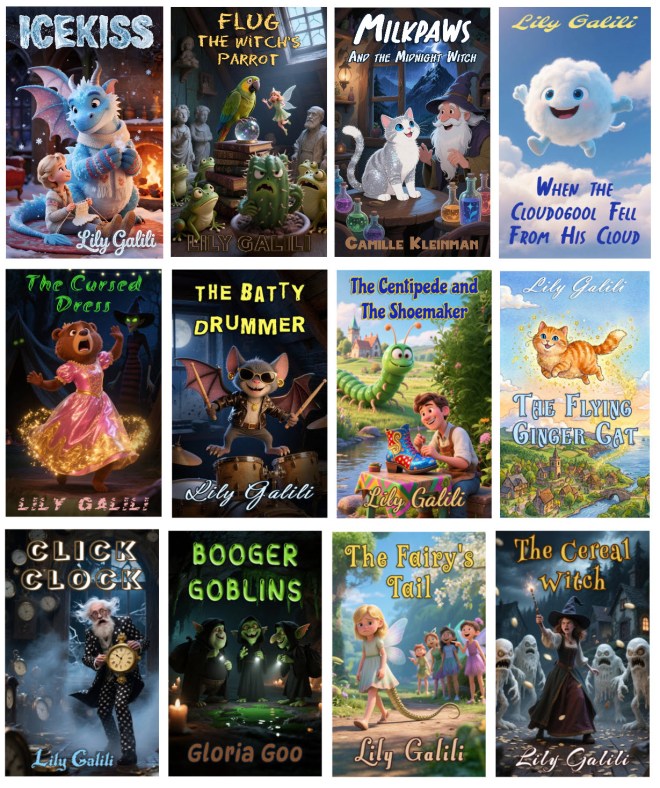
The library includes titles such as The Flying Ginger Cat, IceKiss, The Cursed Dress, Flug the Witch’s Parrot, and The Cloudogool. There are also funny and whimsical stories, including The Booger Goblins.
These different themes give you options when choosing stories that match your child’s interests.
Spanish-Only and Bilingual Options
Some children may prefer to begin with bilingual stories because the English support makes the meaning clear. Others may be ready to explore Spanish-only stories, or enjoy switching between both formats.
You can adjust the choice as your child’s comprehension develops. There is no need to stop using bilingual materials simply because your child has learned some Spanish. They can remain useful for exploring stories with unfamiliar vocabulary and more challenging language.
Browse the growing collection: Free Spanish stories for kids.
Build a Spanish Homeschool Routine Around Stories
You do not need to plan a complicated lesson every day to make stories part of your homeschool.
A simple routine could look like this:
- Read: Explore a bilingual Spanish story together.
- Listen: Revisit the story in audio format when available.
- Create: Draw a scene, act out an event, or invent a new ending.
- Play: Add a puzzle or game from your Spanish learning materials.
- Explore: Choose another story that captures your child’s interest.
You can spread these activities across the week or combine them into a single session. Adjust the routine to your child’s attention span, interests, and current Spanish level.
The aim is to make Spanish a regular part of family learning through content your child wants to return to. Stories give you a flexible starting point, while additional activities let you vary the experience without needing a new curriculum for every session.
Explore Free Spanish Stories and Homeschool Learning Resources
If you’re searching for free Spanish stories for kids, bilingual reading materials, or fun resources to supplement your homeschool Spanish curriculum, LingoLina offers a growing library to explore.
You’ll find both Spanish-only and bilingual English-Spanish stories, along with word puzzles, coloring sheets, and game and play ideas. These materials can support reading time, listening practice, creative activities, and a more natural approach to encountering Spanish at home.
Bilingual stories are particularly useful because they make meaning accessible at every learning level. Beginners can follow the story from the start, intermediate learners can build on familiar vocabulary, and advanced learners can use the Spanish to explore more challenging language.
Rather than relying on disconnected exercises alone, you can give your child opportunities to experience Spanish through characters, adventures, and stories that hold their attention.
Explore our free library of Spanish stories and bilingual stories for kids here.
Bring more stories, imagination, and enjoyable Spanish exposure into your homeschool, one story at a time.
Frequently Asked Questions
Where can I find free Spanish stories for kids?
LingoLina offers a growing library of free children’s stories in bilingual English-Spanish and Spanish-only formats. The collection includes classic fairy tales, original fantasy adventures, and funny, imaginative stories. You can explore them through the free Spanish learning library.
Are bilingual Spanish stories suitable for beginners?
Yes. In LingoLina’s NeuroFluent™ Immersion Method, each sentence appears first in English and is immediately followed by its Spanish translation. Beginners can understand the meaning before encountering the Spanish, making it easier to follow the story without already knowing the vocabulary.
Are bilingual stories useful for children who already know Spanish?
Yes. Intermediate and advanced learners can use bilingual stories to encounter unfamiliar words, notice sentence patterns, and explore more challenging content. They can focus mainly on the Spanish and use the English sentence for clarification when needed.
Should my child read Spanish-only or bilingual stories?
It depends on your child’s current comprehension and the difficulty of the story. Spanish-only stories provide direct exposure to the language, while bilingual stories offer immediate meaning support. Many children can benefit from using both formats.
What Spanish homeschool resources can I use besides textbooks?
Stories, audiobooks, word puzzles, coloring sheets, and games can all supplement a homeschool Spanish curriculum. They provide different ways to encounter the language and can help make learning more varied and enjoyable.
How can I make Spanish reading fun for my child?
Choose stories that match your child’s interests, such as fairy tales, mysteries, fantasy, or funny adventures. You can also combine reading with audiobooks, drawing, imaginative play, and occasional games. Letting children choose their next story can help keep them interested.
Can I use free Spanish stories as part of a homeschool curriculum?
Yes. Stories can supplement your existing curriculum or form part of a more story-centered routine. You can use them for reading, listening, comprehension, creative projects, and repeated exposure to Spanish. Choose activities that suit your child’s needs and learning goals.
What ages are LingoLina’s Spanish stories for?
The growing children’s library offers stories and activities for a range of interests and abilities. Parents can choose material based on their child’s reading skills, Spanish comprehension, and preferred story themes rather than relying on age alone.


