Turning Bedtime Stories Into Spanish Lessons (Without Your Child Noticing)

Discover how to turn nightly bedtime stories in Spanish (or bilingual stories) into natural language learning without effort, stress, or boring lessons.

Most parents read bedtime stories to relax their kids. A warm blanket, a familiar voice, and a world of imagination. It’s the classic nighttime routine. But what if those cozy tales could secretly teach your child Spanish, without a single quiz, worksheet, or lesson plan?

Turns out, they absolutely can.
And bedtime is the perfect moment to sneak Spanish into your child’s brain, softly and powerfully.

In this guide, you’ll learn how reading bilingual English-Spanish kids stories at night transforms into real language absorption using proven neuroscience, emotional connection, and zero stress.

Continue reading Turning Bedtime Stories Into Spanish Lessons (Without Your Child Noticing)

How to Measure Your Child’s Spanish Progress with Bilingual Stories

If you’re teaching your child Spanish at home, you might wonder:
Is it working? Are they really learning?

When you skip flashcards, grammar drills, and stressful testing in favor of bilingual stories, tracking progress might feel less obvious. But make no mistake: your child is learning, and the signs are easy to spot once you know what to look for.

In this guide, we’ll walk through how to measure your child’s Spanish learning progress using bilingual stories.

Whether you’re using bedtime tales, storytime rituals, or audio stories on the go, this article will give you a clear month-by-month roadmap to see results, without pressure or tests.

We’ll also cover the science behind story-based learning, common parent questions, and why this method is one of the easiest, most brain-friendly ways to teach kids Spanish naturally.

Continue reading How to Measure Your Child’s Spanish Progress with Bilingual Stories

Why Your 7-Year-Old Forgets Spanish (And How to Fix It)

If you’ve ever spent a whole week practicing Spanish with your 7-year-old, only to hear them blank out or shrug when you ask, “What does gato mean again?” you’re not alone.

It can feel like you’re pouring water into a bucket with a hole in the bottom. They seem to understand in the moment, but by the next day? Gone. Poof. Vanished.

So, is something wrong? Are they too distracted? Too young? Not trying hard enough?

Actually, it’s none of those things. There’s a much better, science-backed explanation and an even better fix. And it starts with a part of your child’s brain that’s still under construction at age 7.

Continue reading Why Your 7-Year-Old Forgets Spanish (And How to Fix It)

Why Kids Refuse Learning Spanish and How to Make Them Fall in Love with It and Beg for More

If you’re a parent trying to teach your child Spanish and they’re refusing, saying it’s boring, they don’t want to learn it, or outright telling you they hate Spanish and asking you to speak English instead, you’re not alone. This happens in countless households.

Whether your child grew up with Spanish from birth or you’re introducing it later, resistance can hit hard. You might feel frustrated, rejected, or even worried. But there’s a reason behind this refusal, and more importantly, there are gentle, joyful ways to turn things around.

Whether you’re a Spanish-speaking parent hearing those words from your child, or you’re a non-Spanish-speaking parent trying to introduce the language at home, this can feel disheartening. You want your child to connect with their roots. Or become bilingual. Or at least be open to new cultures and opportunities. But when the response is all resistance, what then?

This article will walk you through why kids resist Spanish in the first place, what traditional approaches often get wrong, and how to flip the script. Instead of begging your child to practice Spanish, you can get them asking for more… often without realizing they’re learning at all.

Continue reading Why Kids Refuse Learning Spanish and How to Make Them Fall in Love with It and Beg for More

How to Teach Spanish to Your 7-Year-Old (Backed by Brain Science)

If you’ve ever wondered whether your 7-year-old is too young to learn Spanish, too distracted, or just not showing enough interest yet, you’re not alone.
Here’s some encouraging news: age seven comes with its own special advantages for learning Spanish.

It’s a fun, flexible time in your child’s development right between the sponge-like early years and the more logical, rule-focused stage that kicks in later.

At age 7, kids are curious, imaginative, and just starting to develop stronger reading and thinking skills. It’s the perfect moment to introduce a language through playful stories and natural immersion.

You don’t need flashcards. You don’t need grammar drills. You don’t need hours of practice. And it certainly doesn’t have to feel like more homework.

Continue reading How to Teach Spanish to Your 7-Year-Old (Backed by Brain Science)

The Best Spanish Immersion Methods for Kids: How to Make Learning Spanish Natural, Fun, and Stress-Free

For parents teaching Spanish at home, immersion is the most natural path to fluency. But there’s more than one way to do it. Some families go “Spanish-only” pure immersion, others mix English and Spanish, and many use bilingual books, songs, or shows. The right approach depends on your child’s age, level, and personality.

Let’s walk through what type of Spanish Immersion actually works, what doesn’t, and how you can create a relaxed, joyful environment where Spanish becomes part of daily life, not a homework battle.

Continue reading The Best Spanish Immersion Methods for Kids: How to Make Learning Spanish Natural, Fun, and Stress-Free

Sneak peek: First Two Chapters of ‘The Candy Witch’ Bilingual Story for Kids

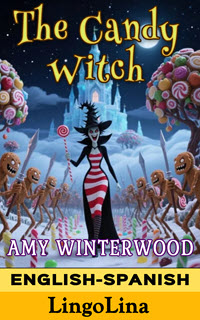
Enjoy the first chapter of our latest bilingual fantasy story book, The Candy Witch, for kids ages 6-12.

Candy Witch English-Spanish Parallel Text Story for Kids to Learn SpanishOn a stormy winter night, Roy is minding his own business… until an enchanted snowflake floats into his room and whisks him away to a frozen land above the clouds.
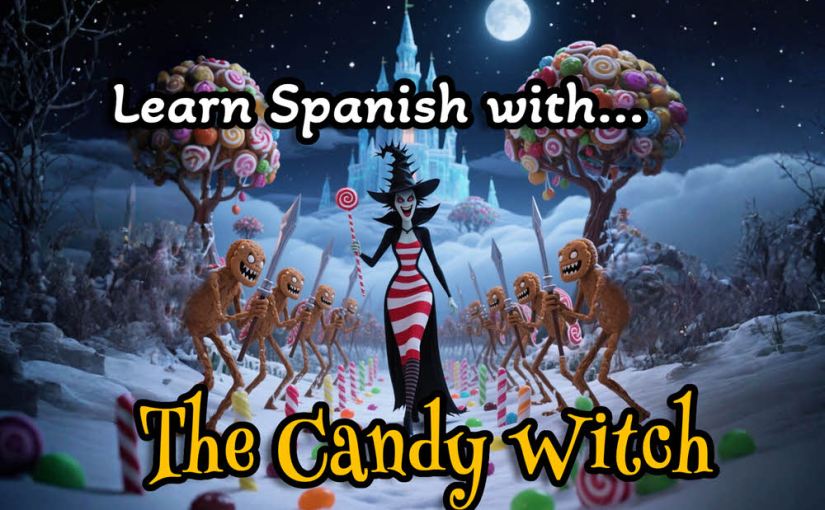
Now he’s stuck in a sugary nightmare with hypnotized kids, flute-playing mice, a sinister Candy Witch, and gingerbread soldiers who want to eat him alive.

It’s funny. It’s creepy. It’s packed with action.
And it teaches your child Spanish sentence by sentence while keeping them glued to the page.

Here’s your chance to read the first two chapters for free!

Continue reading Sneak peek: First Two Chapters of ‘The Candy Witch’ Bilingual Story for Kids

How to Teach Your Child Spanish in a Fun, Natural Way with ‘Ginger and the Cake of Doom’

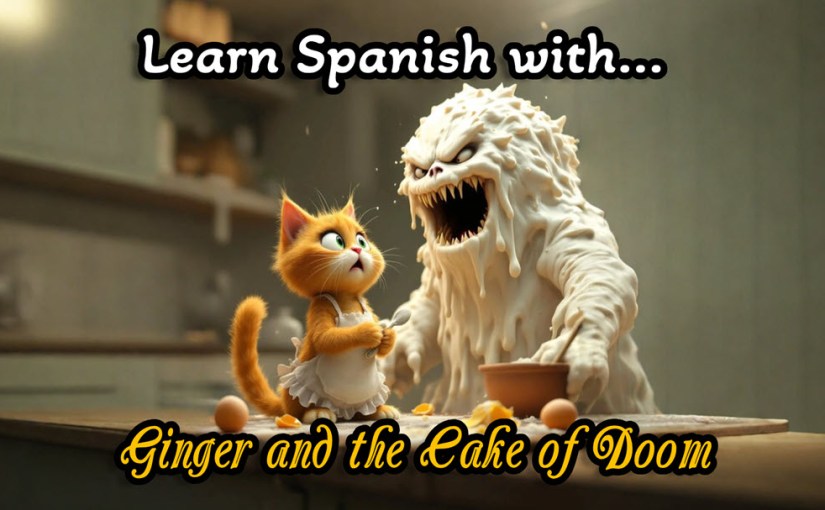
A flying cat, a vengeful cake, and a rescue mission across space… this is one Spanish lesson your kids will actually beg for.

What if learning Spanish felt like a wild adventure instead of a boring lesson?

Imagine your child laughing at a brave flying cat chasing a possessed cake through outer space, without realizing they’re also learning a new language.

That’s the magic of Ginger and the Cake of Doom by Lily Galili, a bilingual fantasy story from LingoLina that helps kids learn Spanish naturally through imagination, emotion, and laughter.

It’s one of those rare books that kids can’t put down, and parents secretly also enjoy just as much.

Continue reading How to Teach Your Child Spanish in a Fun, Natural Way with ‘Ginger and the Cake of Doom’

How to Teach Your Child Spanish in a Fun Way with ‘The Candy Witch’ Bilingual Fantasy Story

Imagine your child giggling through a fantasy story about gingerbread soldiers, enchanted snowflakes, and a villainous witch obsessed with cursed candy—without realizing they’re also learning Spanish.

That’s exactly what happens in The Candy Witch, a bilingual fantasy adventure from LingoLina that turns language learning into a magical family experience.

Continue reading How to Teach Your Child Spanish in a Fun Way with ‘The Candy Witch’ Bilingual Fantasy Story

Should My Child Learn Latin American or European Spanish?

When parents start looking for ways to teach their kids Spanish, they often discover something surprising: there isn’t just one kind of Spanish.

Between Europe and Latin America, Spanish has many accents, slang words, and small grammatical differences. That’s exciting but also confusing.

If your child is learning Spanish, should they learn the version spoken in Spain or the one heard across Latin America?

The short answer: both are beautiful and mutually understandable. But depending on where you live, travel, or imagine your child’s future, one may make more sense.

Continue reading Should My Child Learn Latin American or European Spanish?

How Can I Teach My Child Spanish If I Don’t Speak It? (Simple, Science-Backed Tips for Parents)

In this guide, we’ll discuss the best ways to raise bilingual kids without stress, even if you’re not bilingual yourself.

Many parents love the idea of their kids learning Spanish; it’s fun, useful, and opens doors for their future. But the question that stops most parents in their tracks is, “How can I teach my child Spanish if I don’t even speak it myself?”

The truth is, you don’t need to be fluent. You just need the right tools, mindset, and a relaxed, playful approach. Kids don’t learn languages through grammar rules or endless drills; they learn through exposure, context, and emotional connection. And the great news is that you can create that kind of environment at home, even as a beginner.

Continue reading How Can I Teach My Child Spanish If I Don’t Speak It? (Simple, Science-Backed Tips for Parents)

Why Bilingual Books Are the Easiest and Most Fun Way for Kids to Learn Spanish

Every parent who’s ever tried to teach their child Spanish knows the frustration. Flashcards don’t stick, grammar drills cause groans and yawns, and language apps often feel like more schoolwork.

You want your child to enjoy learning Spanish, not dread it. The good news? There’s a gentler, smarter way: through fun stories.

Bilingual fiction books for kids in Spanish and English turn language learning into an adventure. Instead of memorizing words, kids pick them up naturally as they follow a magical tale.
It feels like storytime, not study time.

Continue reading Why Bilingual Books Are the Easiest and Most Fun Way for Kids to Learn Spanish