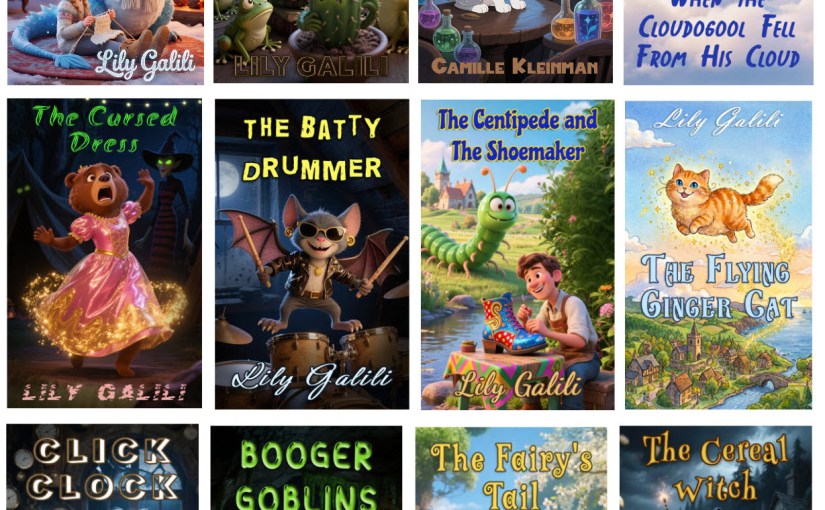
Looking for exciting, magical stories that entertain your kids and help them learn Spanish effortlessly at the same time? You’ve come to the right place.
On this page, you’ll find 40+ completely free stories for kids that make learning Spanish a thrilling, highly enjoyable adventure instead of a boring chore.
At LingoLina, we focus on teaching Spanish through exciting stories.
Instead of grammar worksheets, vocabulary lists, and repetitive drills, we’re helping children learn Spanish naturally through stories they genuinely enjoy reading and listening to.
Our collection includes both bilingual English-Spanish stories and Spanish-only editions, allowing children to progress from complete Spanish beginner to fluent at their own pace.
Whether you’re a parent, homeschooler, teacher, bilingual family, or simply looking for fun ways to introduce Spanish at home, our free stories help kids develop reading comprehension, listening comprehension, proper pronunciation, and Spanish fluency by being immersed with real Spanish in meaningful contexts.
Best of all, everything is designed to make learning Spanish feel like fun, exciting story time instead of stressful, boring school.
Join For Free to Download All Our Free Spanish Stories for Kids!
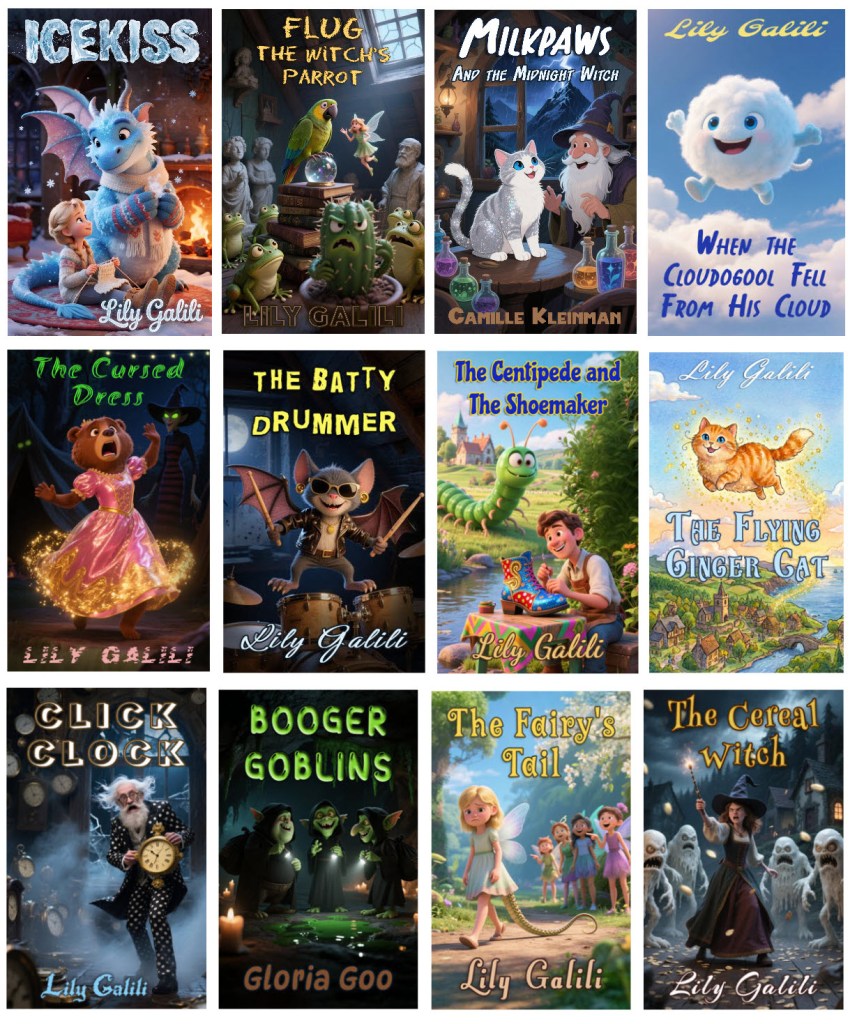
When you download the collection, you’ll receive 41+ exciting stories for kids, available in both bilingual English-Spanish and Spanish-only editions.
The collection includes 29 beloved classic fairy tales alongside 12 original fantasy adventures created exclusively by our authors.
Children can also enjoy Spanish and bilingual audiobooks, allowing them to hear natural Spanish pronunciation while reading along with the stories. Listening and reading together helps strengthen both Spanish listening comprehension and reading skills at the same time.
To extend learning beyond the stories themselves, we’ve also included 50+ Spanish word search puzzles, over 60 printable coloring pages, and more than 300 Spanish vocabulary games and creative play ideas that help children reinforce the vocabulary they encounter naturally throughout the stories.
The entire collection is available as a free download.
Simply enter $0 at checkout to receive your free copy.
As our library continues to grow, even more stories, audiobooks, and activities will be added, including original fantasy stories, sci-fi, adventures, space adventures, historical adventures, Chinese fables, Indian fairy tales, Japanese folktales, and many other exciting adventure stories.
Why Teaching Kids Spanish with Stories is the Most Effective (and Enjoyable) Learning Method
Every new adventure introduces kids to cute and admirable characters, funny situations, exciting mysteries, and imaginary worlds they can’t wait to explore.
The bilingual stories are ideal for beginner to early advanced learners. Kids never have to stop to look up what a Spanish word means in a dictionary or get confused by words they don’t yet know. Instead, they fully understand everything they read or hear all the time, no matter how “complex” the plot or dialogue might be, due to the consistent English support.
Even complete Spanish beginners can enjoy listening to advanced fantasy stories with complex plots, intricate worlds, real Spanish dialogue, and fast-paced action. Thanks to the English translations, they’ll never get lost or overwhelmed.
Best of all, as your child is absorbed in the story and enjoying the imaginary world, they naturally pick up more and more Spanish vocabulary in the background
Spanish learning simply happens naturally while they enjoy the adventure.
Alongside our original stories, we’ve also included many of the world’s most beloved fairy tales. Children can revisit timeless classics, including Cinderella, Little Red Riding Hood, Snow White, Rapunzel, Hansel and Gretel, The Little Mermaid, Jack and the Beanstalk, The Three Little Pigs, Beauty and the Beast, The Frog Prince, The Ugly Duckling, Ali Baba and the Forty Thieves, Sinbad the Sailor, Aladdin, and many others.
Familiar stories offer another advantage for intermediate to advanced language learners who prefer pure Spanish immersion over bilingual immersion. Because many children already know what happens next, they don’t need to work hard to understand the unfamiliar Spanish words.
Why Stories Are One of the Best Ways to Teach Kids Spanish
Stories increase motivation, activate multiple parts of the brain responsible for imagining scenes, provide Spanish words in context (with clear meaning), and make the new Spanish words easier to remember long-term by binding them to vividly imagined scenes and actions.
Instead of learning that manzana means apple from a flashcard, children might meet a hungry dragon eating a shiny red apple. That word becomes connected to a memorable scene and stored in the long-term memory, rather than floating as a dry, isolated vocabulary item from a flashcard which is stored in the short-term memory and quickly forgotten.
Spanish vocabulary learned from stories is easier to understand, absorb, and remember.
Stories also expose children to complete sentences rather than isolated words. Over time, they begin recognizing common sentence patterns naturally, developing an intuitive understanding of Spanish grammar without needing formal grammar lessons.
Perhaps most importantly, stories keep motivation high.
A child rarely asks for another grammar worksheet before bedtime.
They frequently ask for another story.
Why Bilingual Stories Make Learning Spanish Easier for Beginners & Intermediates
Many parents worry their child won’t understand Spanish stories because they’re a complete beginner and don’t know any Spanish words yet. That is a true concern, and throwing a child into a Spanish story at that stage leads to overwhelm, confusion, and discouragement. It’s like throwing a baby into a pool and hoping they’ll swim.
That is exactly why we created bilingual stories for kids.
Our bilingual stories present every sentence first in English, followed immediately by the Spanish translation.
Instead of guessing unfamiliar words or constantly reaching for a dictionary, children always understand exactly what is happening before they encounter the Spanish sentence.
This removes frustration, confusion, and stress entirely.
Even complete Spanish beginners can enjoy fascinating, unique stories from their very first day while picking up Spanish vocabulary without even trying.
As children continue reading, they begin noticing familiar Spanish words appearing again and again. Without consciously trying to memorize them, their brains gradually start connecting English meanings with Spanish vocabulary.
Over time, these connections become stronger until many Spanish words feel instantly familiar.
The learning process becomes calm, enjoyable, and surprisingly effortless.
Our bilingual stories use LingoLina’s neuroscience-backed NeuroFluent™ Immersion Method.
Rather than separating the two languages onto different pages, every sentence appears immediately beside its translation.
This simple format creates a direct connection between what children already understand and the new Spanish they are learning.
Because meaning always comes first, children never feel lost.
Instead of struggling to decode every sentence, they can simply enjoy the story while their brains naturally begin recognizing Spanish vocabulary, sentence structures, and grammar patterns in the background.
Research into language acquisition consistently shows that people learn languages best when they understand what they are reading or hearing. When content is comprehensible, enjoyable, and interesting, learning becomes far more effective than trying to memorize isolated vocabulary words.
Stories also encourage repeated exposure to common words and sentence patterns. Every new adventure reinforces vocabulary encountered in previous stories while introducing new words naturally through context.
Rather than treating Spanish as another school subject, NeuroFluent turns it into something children simply experience.
When to Switch to Spanish Stories for Kids
When a child can understand more than 50% of what they hear or read, it’s a good time to switch to Spanish-only stories for pure immersion. If you switch too soon, your child will be confused and feel demotivated and reject Spanish lessons.
Children love repetition. They’ll often ask to hear their favorite stories again and again. You can take advantage of this natural drive, and first read the stories in the bilingual format, then, once the child knows them by heart, switch to the Spanish-only format for pure immersion.
Why Stories Beat Grammar Drills for Teaching Children Spanish
Traditional language programs often begin with long vocabulary lists and grammar exercises. Children are expected to memorize dozens of disconnected words before they’re allowed to enjoy a real story. Unfortunately, this approach causes many children to lose interest long before they develop confidence.
At LingoLina, we believe the opposite approach works better.
Start with something your child enjoys, like bilingual/Spanish stories, games, songs, and play. Let curiosity drive learning. Allow vocabulary and grammar to develop naturally through repeated exposure.
As children follow the exciting adventures, they naturally build their Spanish vocabulary while also developing listening comprehension, reading comprehension, pronunciation, and eventually speaking confidence.
Learning no longer feels like studying. It simply feels like reading another great book.
Spanish Reading Practice That Children Actually Enjoy
One of the biggest challenges parents face is finding Spanish reading practice that doesn’t feel like homework. Children quickly lose motivation when every page is filled with exercises, translations, or questions.
Stories solve this problem beautifully.
Each chapter encourages children to keep reading because they genuinely want to know what happens next. Curiosity becomes the engine driving language learning.
Instead of asking children to study Spanish for thirty minutes, you’re simply inviting them into another magical adventure filled with witches, dragons, magical creatures, brave heroes, talking animals, mysterious forests, enchanted castles, and unforgettable characters.
The language becomes part of the adventure rather than the focus of it. That simple shift changes everything.
Download our free collection of stories for kids here!
To learn the science behind how story learning works, enroll in our free online courses published by the Open University on their global learning platform.


