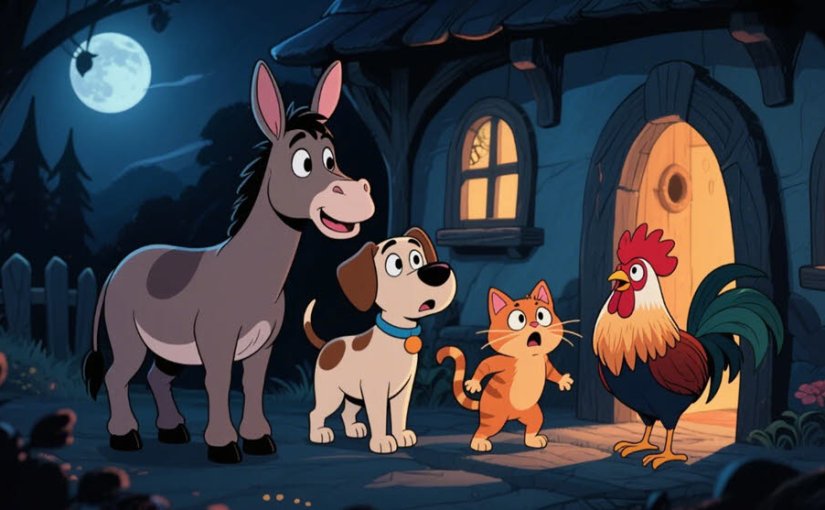
This bilingual English–Spanish version of The Musicians of Bremen is an easy and enjoyable way for beginners to learn Spanish through reading.
Each short English sentence appears with its Spanish translation, helping readers understand new vocabulary instantly.
This classic fairytale offers simple language, gentle repetition, and natural Spanish immersion that works for kids, adults, and anyone who prefers learning Spanish through stories instead of drills.
The Musicians of Bremen / Los Músicos de Bremen
There was once an old donkey who worked on a farm.
Había una vez un burro viejo que trabajaba en una granja.
He had carried heavy sacks his whole life.
Había cargado sacos pesados toda su vida.
But now he was tired and weak.
Pero ahora estaba cansado y débil.
His owner wanted to get rid of him.
Su dueño quería deshacerse de él.
So the donkey decided to run away.
Así que el burro decidió huir.
“I will go to Bremen,” he said.
“Iré a Bremen,” dijo.
“I will become a musician!”
“¡Me convertiré en músico!”
On the road he met an old dog.
En el camino encontró a un perro viejo.
The dog looked sad and hungry.
El perro se veía triste y hambriento.
“Why are you so gloomy?” asked the donkey.
“¿Por qué estás tan triste?” preguntó el burro.
“I am too old to hunt,” the dog said.
“Soy demasiado viejo para cazar,” dijo el perro.
“My master doesn’t want me anymore.”
“Mi amo ya no me quiere.”
“Come with me to Bremen!” said the donkey.
“¡Ven conmigo a Bremen!” dijo el burro.
“We will be musicians together.”
“Seremos músicos juntos.”
The dog wagged his tail and joined him.
El perro movió la cola y se unió a él.
Soon they met a skinny, worried-looking cat.
Pronto encontraron a un gato flaco y preocupado.
“Why do you look so frightened?” asked the donkey.
“¿Por qué pareces tan asustado?” preguntó el burro.
“I am too old to catch mice,” the cat said.
“Soy demasiado viejo para atrapar ratones,” dijo el gato.
“My lady doesn’t want me in the house anymore.”
“Mi señora ya no me quiere en la casa.”
“Come with us to Bremen!” said the dog.
“¡Ven con nosotros a Bremen!” dijo el perro.
“You can play music with us.”
“Puedes tocar música con nosotros.”
The cat agreed and followed them.
El gato estuvo de acuerdo y los siguió.
A little farther down the road they saw a rooster.
Un poco más adelante vieron a un gallo.
He was crowing very loudly.
Estaba cantando muy fuerte.
“Why are you shouting?” asked the donkey.
“¿Por qué gritas?” preguntó el burro.
“My family wants to cook me for dinner,” the rooster said sadly.
“Mi familia quiere cocinarme para la cena,” dijo el gallo tristemente.
“Come with us to Bremen!” said the cat.
“¡Ven con nosotros a Bremen!” dijo el gato.
“You can sing in our band.”
“Puedes cantar en nuestra banda.”
The rooster happily joined the group.
El gallo se unió felizmente al grupo.
The four friends walked until nightfall.
Los cuatro amigos caminaron hasta el anochecer.
They found a large house in the dark forest.
Encontraron una gran casa en el bosque oscuro.
Light glowed in the windows.
Había luz en las ventanas.
“I smell food!” said the dog.
“¡Huelo comida!” dijo el perro.
“I hear laughing,” said the cat.
“Escucho risas,” dijo el gato.
They peeked through the window.
Miraron por la ventana.
Inside were robbers eating a big feast.
Adentro había ladrones comiendo un gran festín.
“We must scare them away!” said the donkey.
“¡Tenemos que asustarlos!” dijo el burro.
“We will perform our greatest music!” said the rooster.
“¡Interpretaremos nuestra mejor música!” dijo el gallo.
The donkey stood by the window.
El burro se paró junto a la ventana.
The dog climbed on the donkey’s back.
El perro se subió a la espalda del burro.
The cat climbed on the dog.
El gato se subió al perro.
The rooster perched on top.
El gallo se posó en la cima.
Together they began to sing.
Juntos comenzaron a cantar.
Hee-haw! Woof! Meow! Cock-a-doodle-doo!
¡I-a! ¡Guau! ¡Miau! ¡Kikirikí!
Their music was terrible… but very loud!
Su música era terrible… ¡pero muy fuerte!
The robbers jumped in fear.
Los ladrones saltaron de miedo.
They thought monsters were attacking the house.
Pensaron que monstruos estaban atacando la casa.
They ran into the forest without looking back.
Corrieron al bosque sin mirar atrás.
The animals rushed inside.
Los animales entraron corriendo.
They ate the feast happily.
Comieron el festín felices.
Then they found soft places to sleep.
Luego encontraron lugares suaves para dormir.
The donkey lay on the straw.
El burro se acostó en la paja.
The dog slept behind the door.
El perro durmió detrás de la puerta.
The cat curled up by the fire.
El gato se acurrucó junto al fuego.
The rooster perched on a beam.
El gallo se posó en una viga.
They felt warm, safe, and proud.
Se sentían cálidos, seguros y orgullosos.
They never bothered traveling to Bremen after all.
Al final, nunca se molestaron en viajar a Bremen.
They liked the house in the forest much more.
Les gustó mucho más la casa en el bosque.
And the four friends lived there happily ever after—
Y los cuatro amigos vivieron allí felices para siempre—
singing, eating, and enjoying their peaceful life.
cantando, comiendo y disfrutando de su vida tranquila.
Looking for more bilingual stories, original stories, or longer books with complex plots for older kids?
LingoLina publishes thrilling sci-fi, fantasy, action, adventure, magical adventures, and fascinating nonfiction books for kids, teens, and adults.
We offer short stories as well as full-length books in English and Spanish to help you learn Spanish language the easy, fun way.
Check out our full library of bilingual stories here.

 LingoLina